Two phone cases can look almost the same in a photograph and feel completely different in the hand. One grips, one slides; one stays clear for years, one turns yellow by summer; one softens and darkens with use, one looks the same on the last day as the first. Most of that comes down to what the case is made of. This guide explains the common materials, what each is good and bad at, and how to look after them.
Why the material matters
The material decides almost everything you notice about a case after the first week:
- Protection. Soft materials absorb a knock by giving a little. Hard materials spread a knock across the whole case. Good protective cases often combine the two.
- Grip. Some materials stick slightly to a hand and a table, which stops drops. Others are smooth, which makes them easier to slide into a pocket.
- How it ages. Some plastics yellow in sunlight, some soft materials stretch, and leather changes colour with handling.
- How it cleans. Some wipe clean in seconds, others hold onto lint, make-up and dye from jeans.
- What works through it. Plastic, silicone and leather let wireless charging and magnetic accessories work. Metal and thick layers can get in the way.
Product pages often name the material, sometimes as letters. TPU, PC and PU are the three you will see most often, and each is explained below. If you want to browse by material, the silicone, TPU and leather ranges gather accessories made from each.
Reading the material on a product page
Product pages are not always consistent with their words. "Soft case" may mean silicone or TPU. "Hard case" usually means polycarbonate, sometimes another rigid plastic. "Hybrid" or "two-in-one" usually means a soft TPU edge with a hard polycarbonate back. "PU leather" means a leather-look coating, not real leather. "Liquid silicone" is a silicone case, usually with a soft lining. If the material matters to you, look for it in the specification rather than the title, and look at the close-up photographs of the edges, where the layers show.
Silicone
Silicone is a soft, rubbery material with a slightly velvety feel. Cases made from it are flexible, so they stretch over the phone and then hug it closely. Many silicone cases have a soft microfibre lining inside, which keeps the back of the phone from being scratched.
What it is good at
Silicone grips. A phone in a silicone case is less likely to slide off a car seat, a sofa arm or a sloping desk, and less likely to slip out of a hand. It absorbs small knocks well, it is warm and pleasant to hold, and it comes in almost any colour. Silicone and soft cases are among the most popular everyday cases for these reasons.
What it is less good at
The grip that stops it sliding off a table also makes it drag on the way into a tight pocket, and it picks up lint, dust and pet hair. Pale colours can darken where hands hold them most, and dye from new jeans can transfer onto them. Thin silicone cases stretch over time, and an old one may start to lift at the corners. Silicone is also a poor choice for a case that needs to be completely rigid.
TPU
TPU stands for thermoplastic polyurethane. It is a flexible plastic, firmer and smoother than silicone, and it is the material of most clear cases and many soft-edged protective cases. It can be made glass-clear, frosted, coloured or tinted.
What it is good at
TPU bends, so a case made from it stretches over the phone and springs back. It absorbs shock well, which is why many tough cases use a TPU edge or inner layer. It feels smoother than silicone, slides into a pocket more easily, and does not pick up lint in the same way. It can also be shaped with air pockets in the corners, which many cases use to soften drops.
What it is less good at
Clear TPU yellows over time, which is explained further down. Very thin TPU cases can feel a little floppy and may not hold their shape round the buttons. Soft TPU also marks more easily than hard plastic, though small marks on a frosted case barely show.
Clear cases
Most clear cases are either all TPU, or a stiff clear back of polycarbonate with a soft TPU edge. The mixed kind often stays clearer for longer on the back, because polycarbonate is less prone to yellowing, while the soft edge absorbs knocks.
Polycarbonate and hard plastic
Polycarbonate, often shortened to PC, is a rigid, tough plastic. It is light, strong for its weight and hard to crack. It is used for the stiff shells of hard and slim cases, for the outer layer of many tough cases, and for the clear backs of hybrid cases.
What it is good at
A hard shell spreads the force of a knock across the whole case rather than letting it land on one spot. It can be made very thin, so slim cases that add almost nothing to the phone are usually polycarbonate. It holds its shape for years, takes printing and coatings well, and is smooth, so it slips in and out of pockets easily.
What it is less good at
Being rigid, a hard shell absorbs less shock on its own than a soft case, which is why the best protective cases pair it with a soft inner layer or soft corners. Hard cases can also be slippery, and some show scratches on glossy finishes. A tight hard case can be difficult to take off.
Tough cases
Most tough and shockproof cases combine two or three of these materials: a soft TPU or silicone layer next to the phone to absorb the shock, a hard polycarbonate shell outside to spread it, and sometimes thicker corners or a raised lip. Each layer does what it is best at.
Hybrid cases
Between slim shells and full tough cases sit hybrid cases: a stiff polycarbonate back, often clear, joined to a soft TPU frame round the sides. The back stays flat and clear, the frame takes the knocks on the corners and edges, and the case stays reasonably slim. They are a good middle ground for people who want more protection than a slim case without the bulk of a tough one, and they are one of the most common designs for clear cases.
Leather and leather-look
Real leather
Real leather cases are usually a leather skin over a hard inner shell, which gives the leather its shape and does the protecting. Leather feels warm and soft, and it changes as you use it: it darkens, softens and picks up the marks of your hands. Many people like this, and a well-used leather case can look better than a new one. Others would rather a case looked the same for as long as they own it.
Leather is sensitive to water, oil, make-up and dye from other materials such as denim, all of which can mark it. On a phone with magnets, a magnetic charger or accessory can leave a faint ring pressed into the leather over time. Apple notes that cleaning a leather case may change its colour, and that leather cleaners and conditioners can change the colour of leather too.
Leather-look materials
Leather-look cases, often labelled PU leather or vegan leather, use a plastic coating on a fabric backing, made to look and feel like leather. They do not darken or soften with use, they shrug off water better, and they wipe clean more easily. They also do not age in the rich way real leather does, and over years the surface can crack or peel at the edges. Many leather cases and wallet and flip cases use these materials.
Leather on wallet cases
Wallet and flip cases are opened and closed many times a day, so the fold of the cover takes the most wear. On real leather, the fold softens and darkens first. On leather-look materials, it is where cracking starts after long use. Cards pushed in and out of the slots also stretch them, so a slot that was tight on the first day is often looser after a few months. That is normal and usually helpful, but it is worth not over-filling the slots at the start.
Metal, glitter and other finishes
Metal
Metal is used for frames, camera rings, trims and the occasional full back, usually aluminium. It looks and feels premium and is very strong. Its drawbacks are that it can scratch the phone if grit gets between them, it adds weight, and it can get in the way of wireless charging and signals. Apple says a metal case can stop or slow wireless charging. If you charge on a pad, check that a case with metal parts says it works with wireless charging. The metal range gathers accessories with metal parts.
Metal is far more common on the things a phone sits in than on the case itself. Stands, holders and grips are often aluminium, because it is light, stiff and does not bend under the weight of a phone, and it does not touch the charging coil when the phone is only resting on it. A phone in a soft case on an aluminium stand gets the best of both: the case protects the phone, and the stand holds it steady without wobbling.
Glitter and liquid
Glitter cases come in three kinds: glitter printed or set into the plastic, which is as tough as a normal case; a sparkling coating on the surface, which can rub off where hands hold it; and liquid glitter sealed between two layers, which moves when you tip the phone. Liquid cases are sealed, but a sharp knock on a hard edge can split one, so keep them for careful use.
Fabric, wood and stone
Some cases use woven fabric, real wood, cork or stone on the back for a natural look. Fabric is warm and grippy but holds dirt; wood and stone are usually thin layers on a plastic shell. All of these look different from the usual and need a little more care when cleaning.
Coatings
Many plastic cases have a coating on top: soft-touch for a velvety feel, matte to hide fingerprints, or gloss for shine. Coatings change how a case feels and can wear thin on the corners over a long time.
Why clear cases yellow, and what slows it
Almost everyone who has owned a clear case has watched it slowly turn yellow. It is not dirt. The plastic itself is changing.
What causes it
Clear plastics, TPU most of all, react with oxygen over time, and ultraviolet light from the sun and heat both speed that reaction up. The reaction creates chemical groups inside the plastic that absorb blue light, so the case looks yellow. A coloured case is protected partly by its own pigment, which absorbs much of the ultraviolet light; a clear case has nothing to shield it. Oils and sweat from skin are also said to speed it up.
Why it does not wash out
Because the change happens inside the plastic, cleaning does not reverse it. Washing removes the grime on the surface, which can make a case look a little better, but the yellow tint stays.
What slows it
- Anti-yellowing clear cases have stabilisers added to the plastic to slow the reaction. They still change in the end, but more slowly.
- Cases with a stiff polycarbonate back tend to keep their back clearer than all-TPU cases.
- Keeping the phone out of strong sun, off a hot car dashboard and away from radiators helps, because heat and ultraviolet light are the main causes.
- Gentle, regular cleaning keeps skin oils and grime off the surface.
If you want a clear look but cannot stand the yellowing, a frosted or tinted case hides it far better than a glass-clear one.
Yellowing or dirt: how to tell
Dirt sits on the surface and is usually patchy: darker at the edges, round the buttons and where your fingers hold the case. It comes off, at least partly, with a damp cloth and mild soap. Yellowing is even across the whole case, including the inside, and does not change when the case is cleaned. Hold the clean, dry case against a sheet of white paper: if it still looks yellow all over, it is the plastic itself.
Cleaning and caring for each
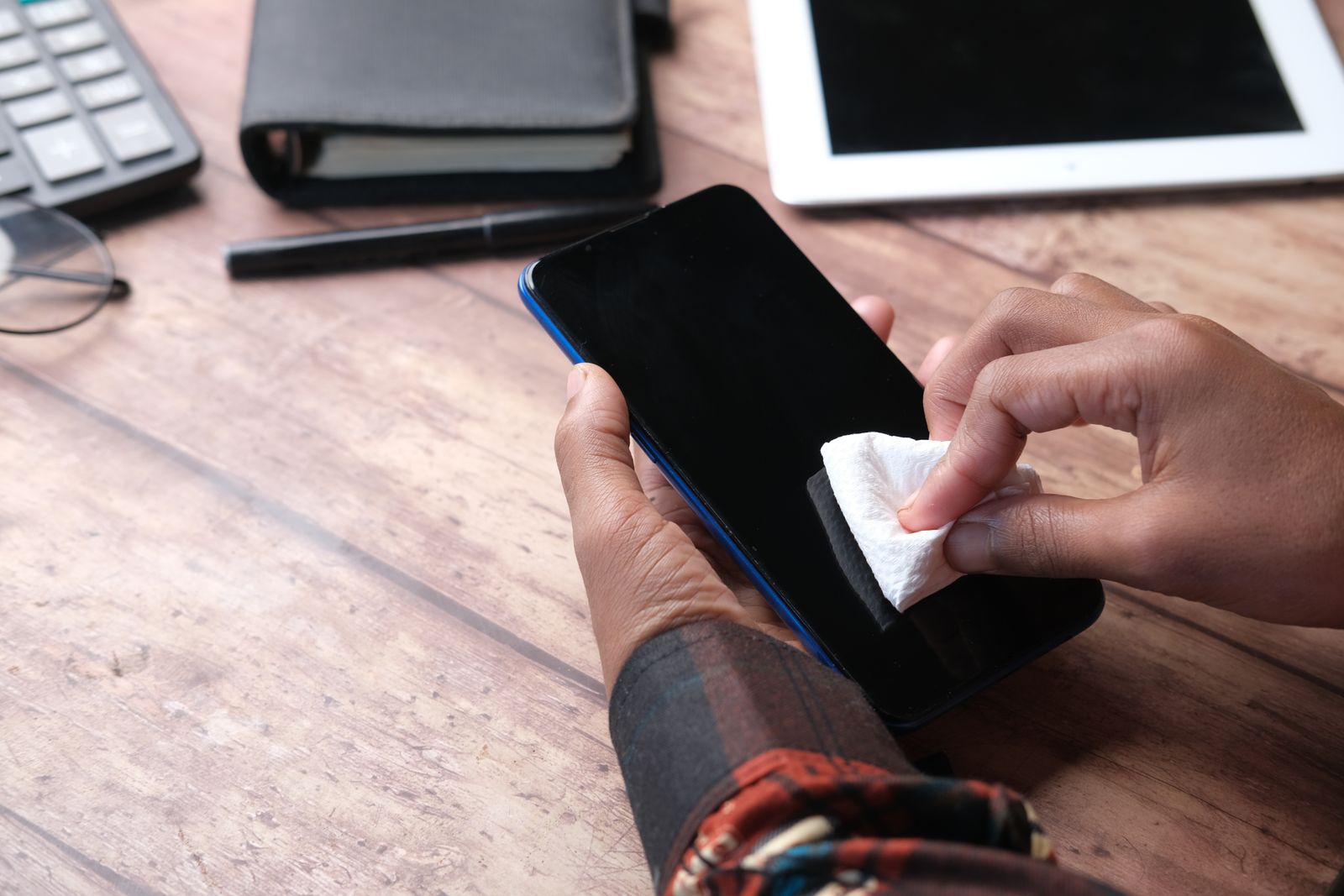
A clean case looks better and protects the phone better, because grit trapped inside a case can scratch the phone's back and frame over time. The general rules from Apple's cleaning advice are sensible for any case: use a soft, lint-free cloth rather than kitchen roll or towels, do not spray a cleaner straight onto the item, and do not use bleach, products with hydrogen peroxide, or abrasives. A phone cleaning kit or a spray and cloth made for screens has what you need. The guide to cleaning your phone safely covers the phone itself.
Silicone and clear cases
Take the phone out first. Apple's advice for its silicone and clear cases is to wipe the outside and inside with a soft, slightly damp, lint-free cloth, and not to use window cleaners, household cleaners, aerosol sprays or solvents. Lint on silicone comes off with a slightly damp cloth or a piece of sticky tape. Let the case dry completely before you put the phone back in.
Hard plastic and polycarbonate
Wipe with a soft, slightly damp cloth. Avoid scouring pads and strong cleaners, which can dull a glossy finish or strip a coating.
Leather
Apple's advice for its leather cases is a clean cloth with warm water and mild hand soap, wiped gently, and it warns that cleaning may affect the colour. Do not soak leather, keep it away from long spells of strong sunlight and heat, and dry it at room temperature, never on a radiator. Leather-look materials wipe clean with a damp cloth.
Glitter, metal and fabric
Wipe glitter and liquid cases gently and never press hard on a liquid case. Wipe metal parts with a dry soft cloth and make sure no grit is caught between metal and phone. Fabric cases can be dabbed with a damp cloth and a little mild soap, then left to dry.
How often
Wipe a case every week or two, and take it off for a proper clean every month or so. If you use magnetic accessories, check the back for grit before snapping a charger or wallet on.
When to replace a case
A case is worth replacing when it no longer does its job. Signs to look for are corners that have split or stretched so the phone is loose, a lip round the screen that has worn flat, button covers that no longer press cleanly, cracks in a hard shell, and a soft case that has stretched so much it lifts away from the phone. A case that has taken a very hard drop may also have done its job once and be weaker for the next one. Cases are inexpensive compared with a screen or a new phone, so it is not worth carrying on with one that has given up.
Questions people ask
Which is better, silicone or TPU?
Neither is better for everyone. Silicone grips more and feels softer; TPU is smoother, slides into pockets more easily and can be made clear. For a clear case, TPU or a TPU and polycarbonate mix is the usual choice.
Which material protects best?
A case with a soft inner layer and a hard outer shell usually protects best, because the soft layer absorbs the shock and the hard shell spreads it. Thickness and corner design matter as much as the material.
Can I get the yellow out of a clear case?
Not really. The yellowing is inside the plastic, so washing will only remove surface grime. An anti-yellowing case and keeping it out of sun and heat slow it down next time.
Does leather work with wireless charging?
Usually, yes, because leather is thin and not metal. A magnetic charger may leave a faint ring on real leather over time.
What does PU mean on a case?
PU stands for polyurethane. On a case it usually means PU leather, a leather-look coating on a fabric backing, rather than real leather.
Are metal cases a problem for signal?
A full metal back can interfere with wireless charging and, in some cases, signal. Most cases with metal only use it for trims, frames or camera rings, which cause far fewer problems. Check the product page if you charge wirelessly.
Where to go next
To shop by material, see silicone and soft cases, clear cases, hard and slim cases, leather cases, and the aluminium range for metal stands and accessories. For the other parts of the choice:
- How to choose a phone case: the whole choice, from the phone to the fit
- Screen protectors explained: glass, privacy, anti-glare and film
- Wireless and magnetic charging explained: charging through a case
- How to clean your phone safely: the phone, the ports and the screen