The cable that cannot be left behind
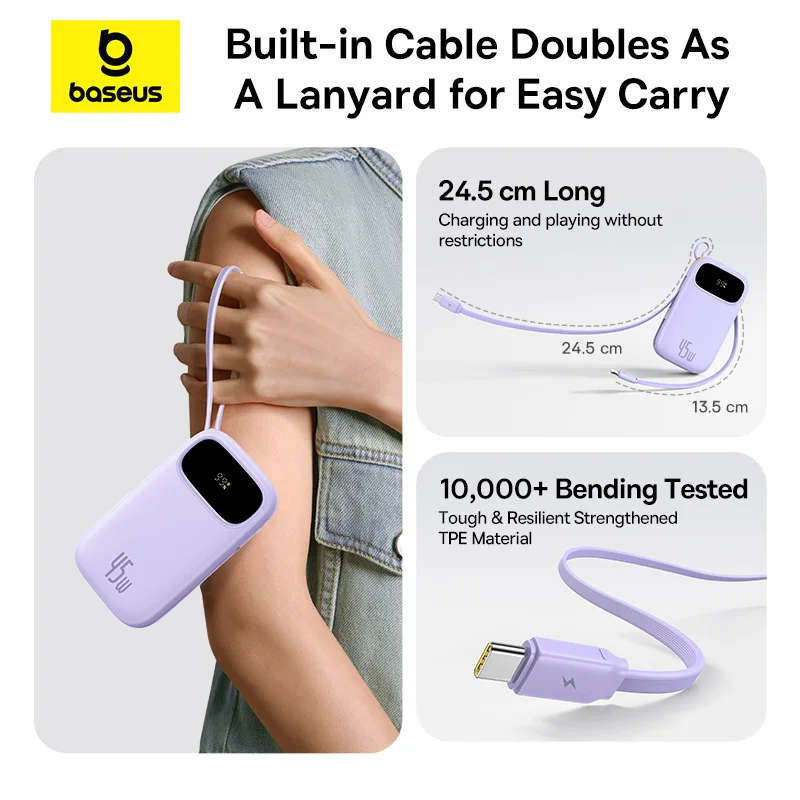
A power bank is no use without a cable, and the cable is the part that gets left on the desk, borrowed or lost. A power bank with built-in cables carries its own, tucked into the case or wrapped round it, so it is always there. It suits anyone who has reached for a power bank on the train and found the cable at home, and anyone sharing a power bank with a friend whose phone needs a different plug. The power banks in this range today all have a display showing the charge left, and run from 10,000mAh, a slim everyday size, up to 30,000mAh for trips.
The kinds here
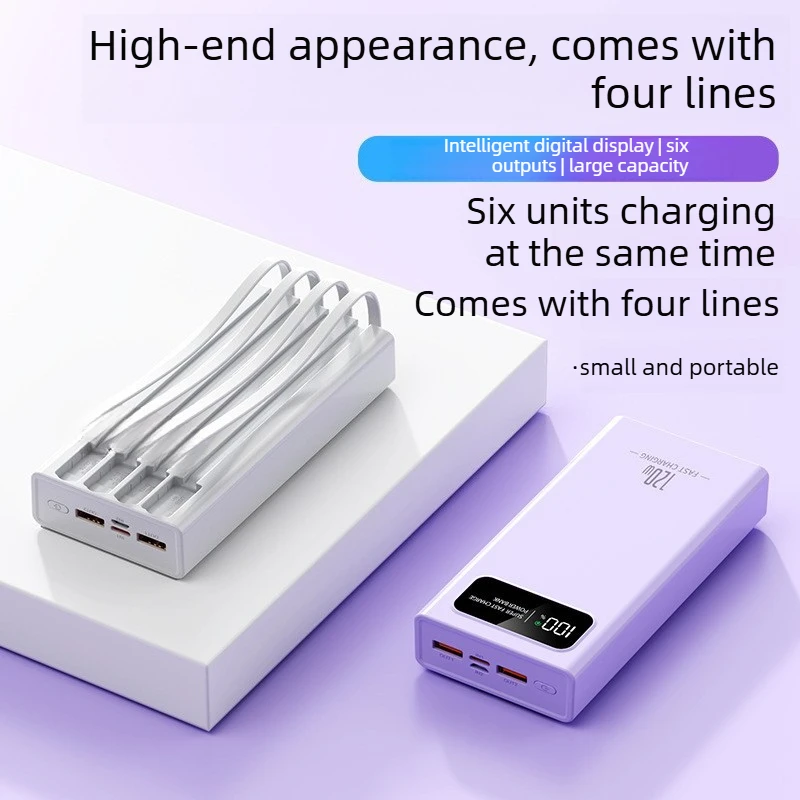
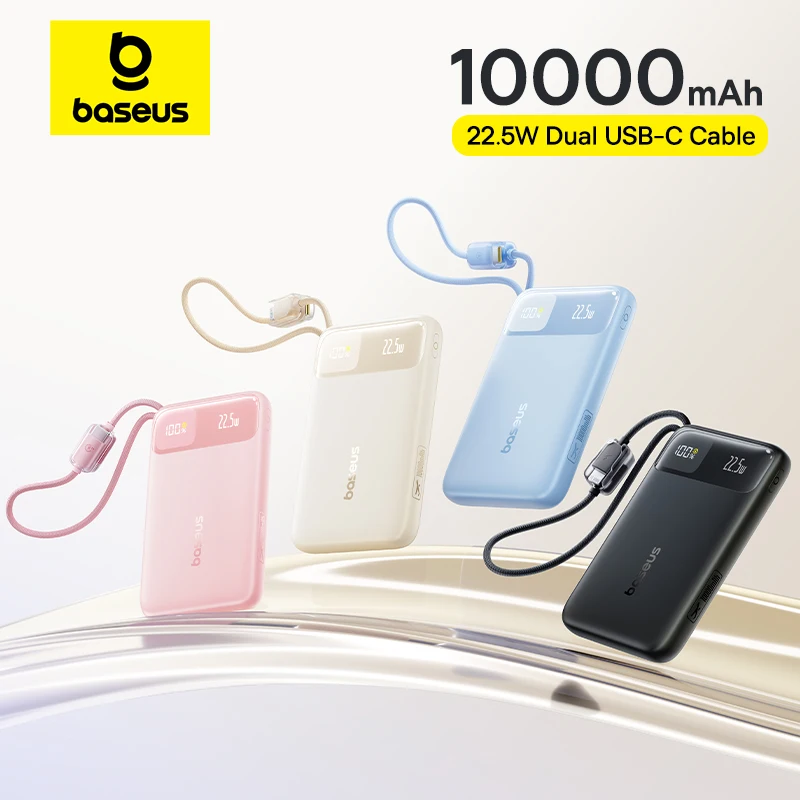
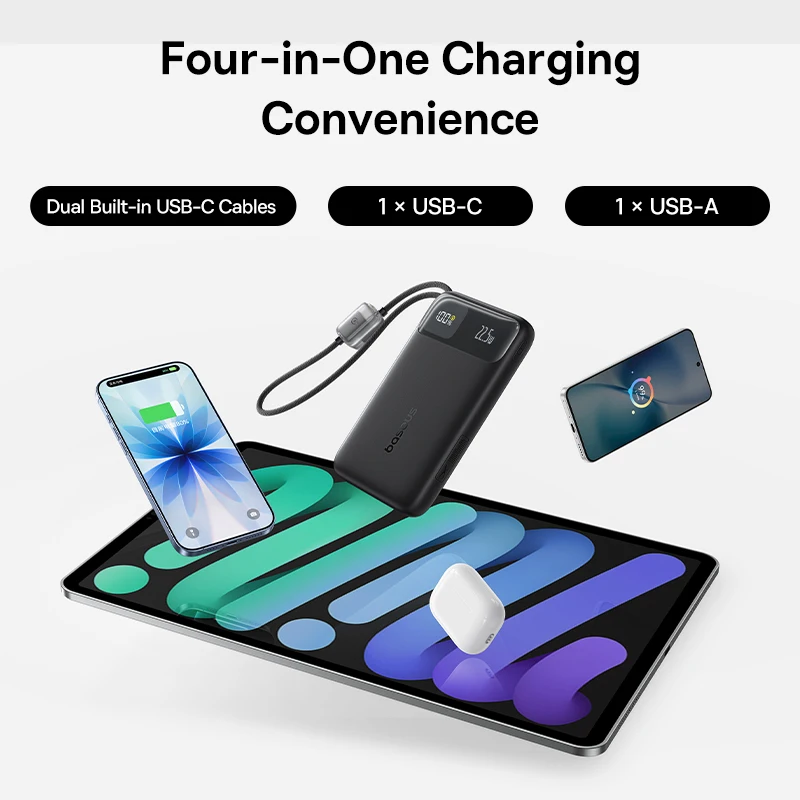
- Twin USB-C cables. A slim 10,000mAh power bank with two USB-C cables built in, plus a USB-C and a USB-A socket, so several devices charge at once.
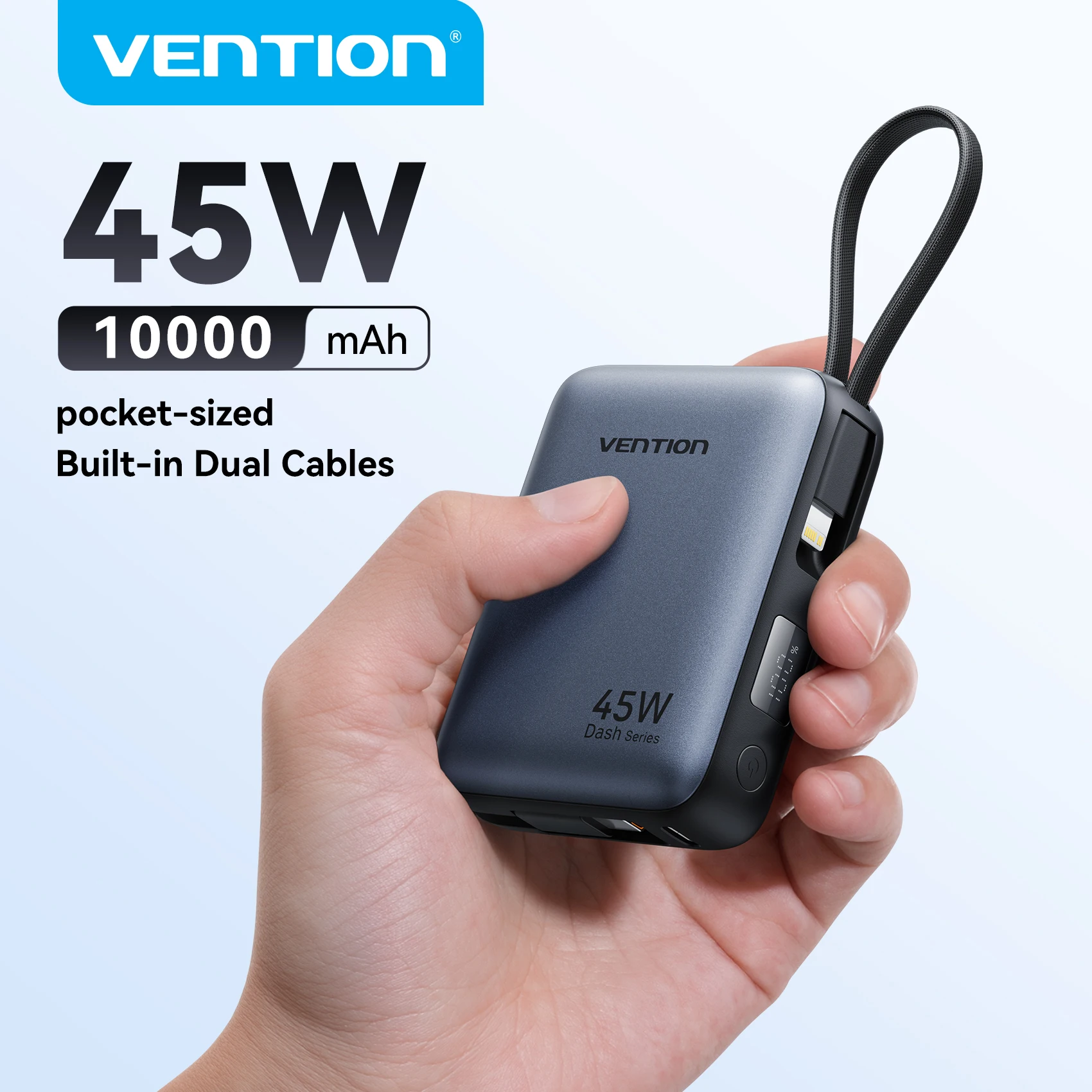
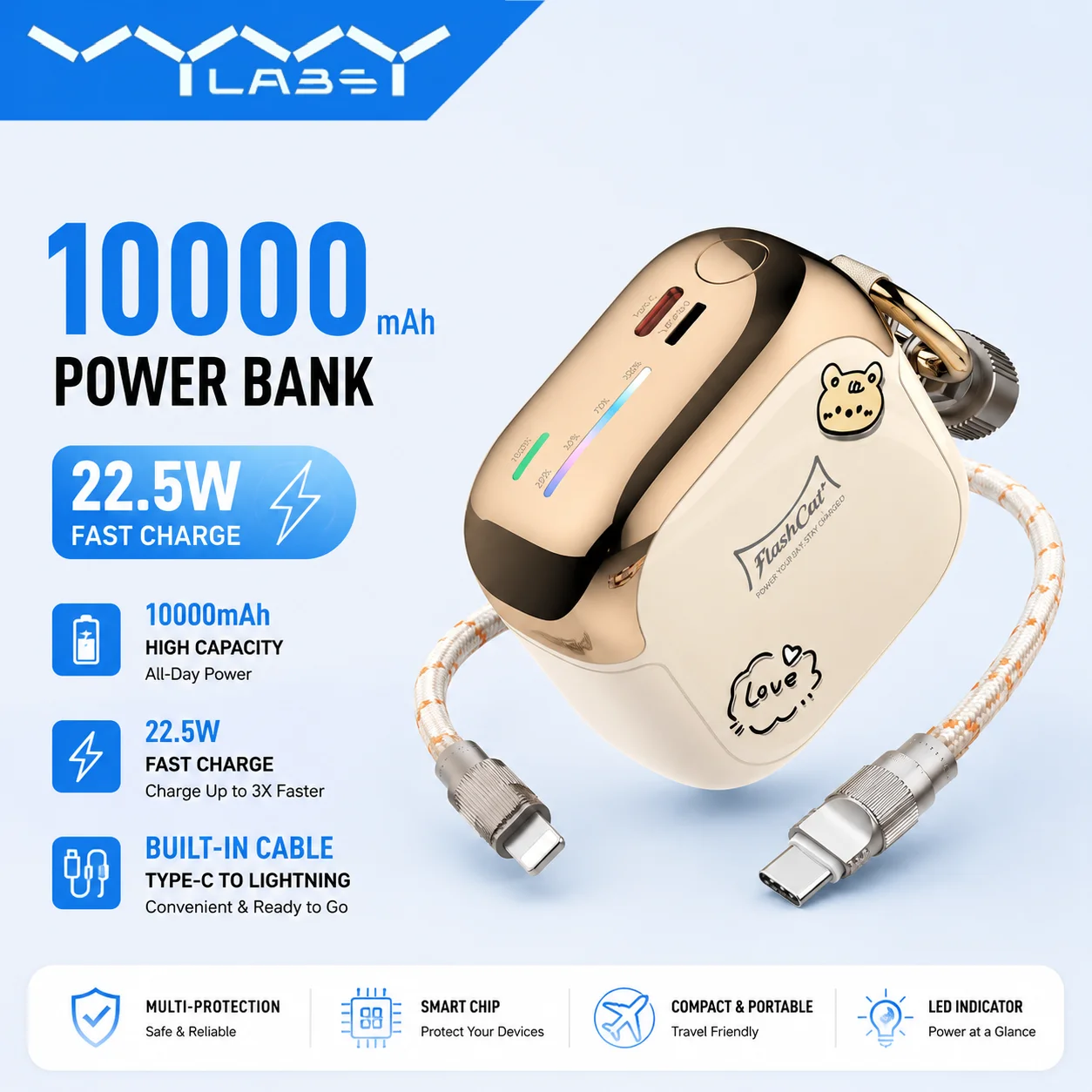
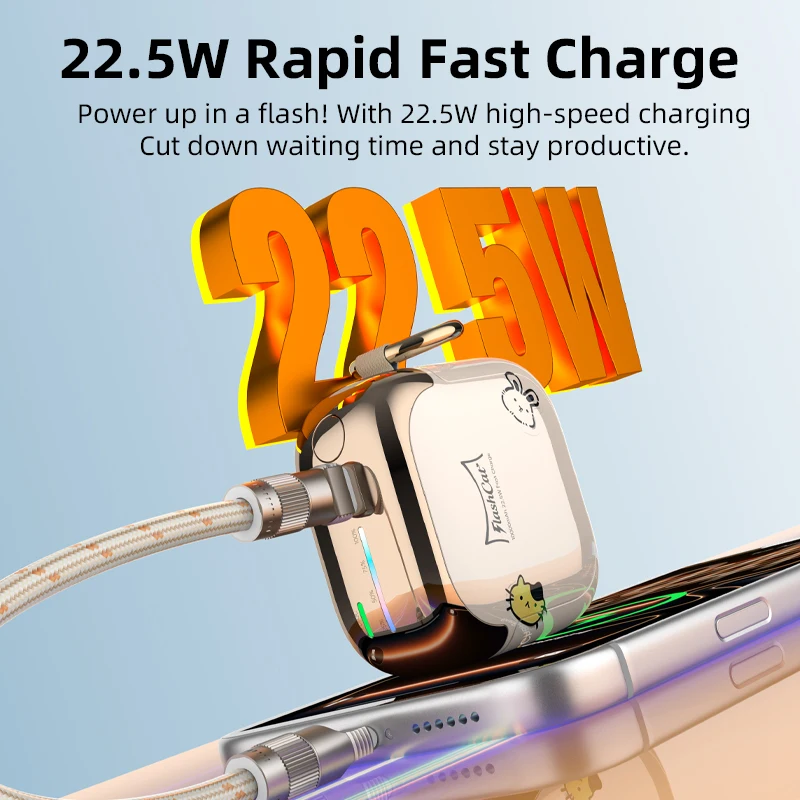
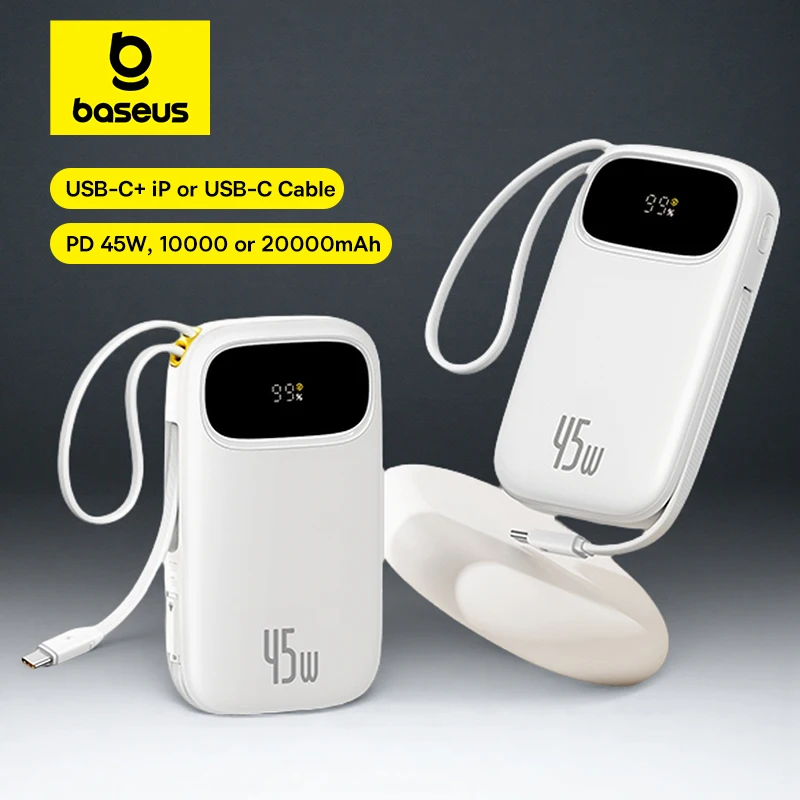
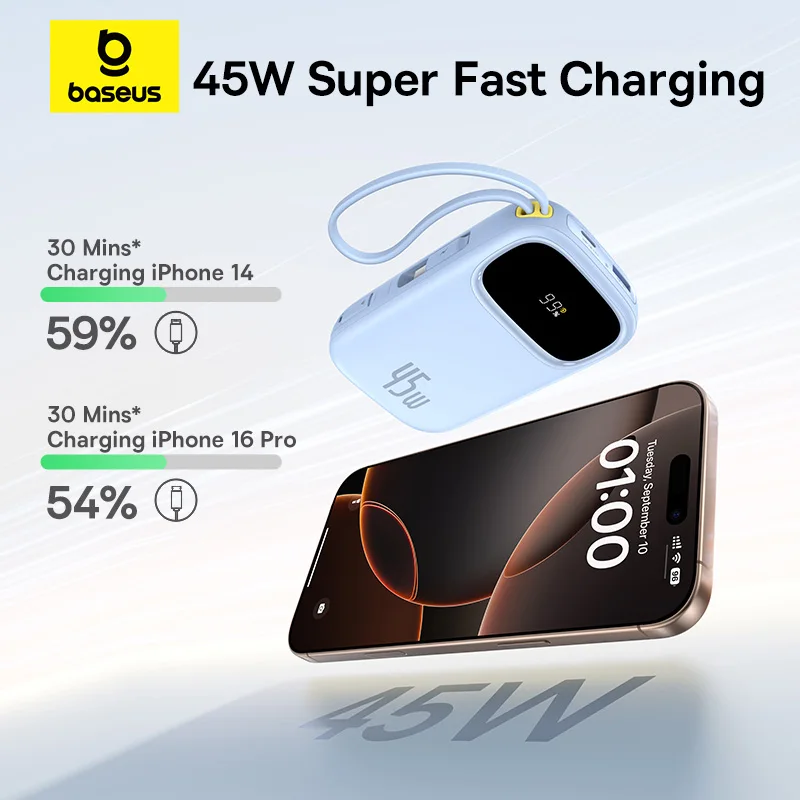
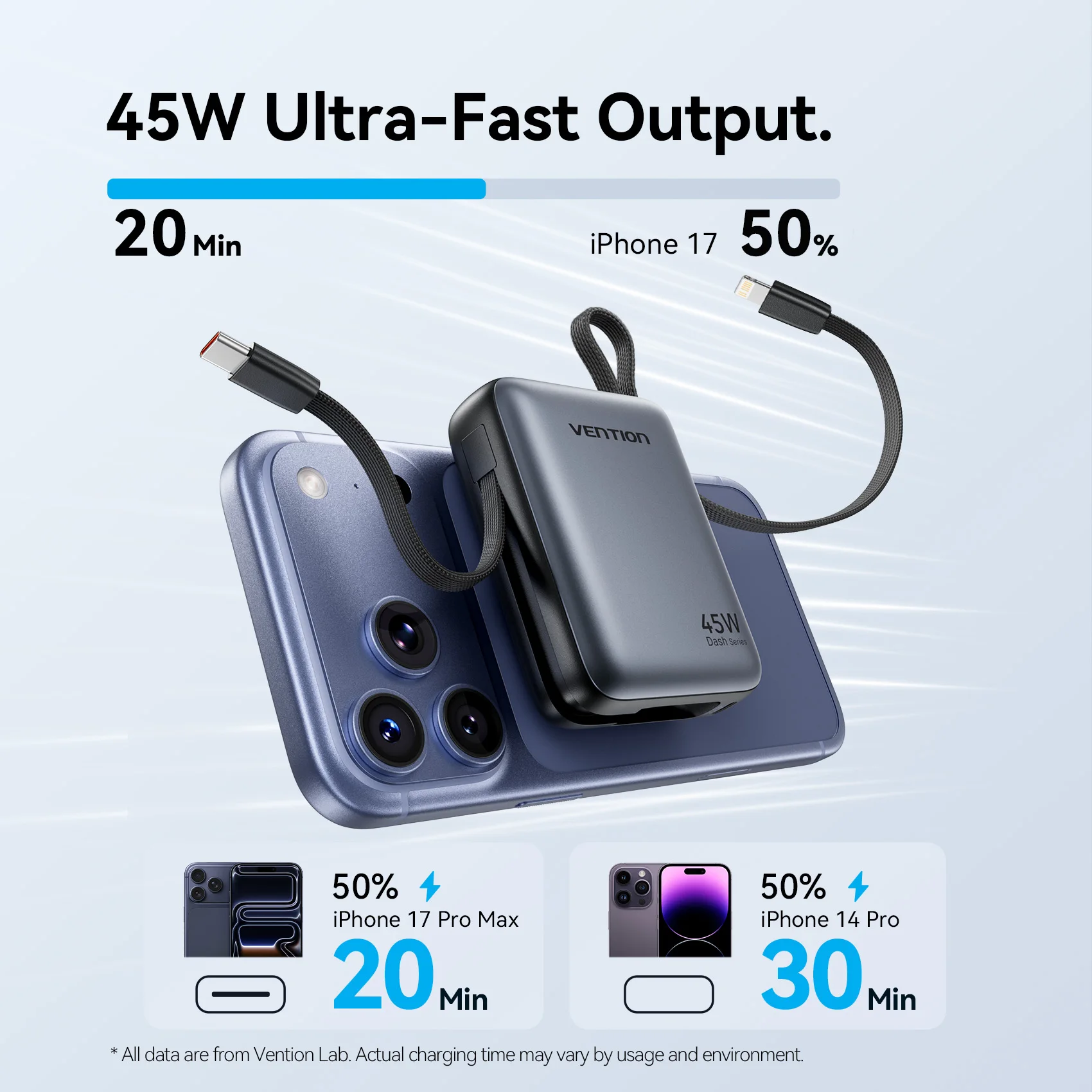
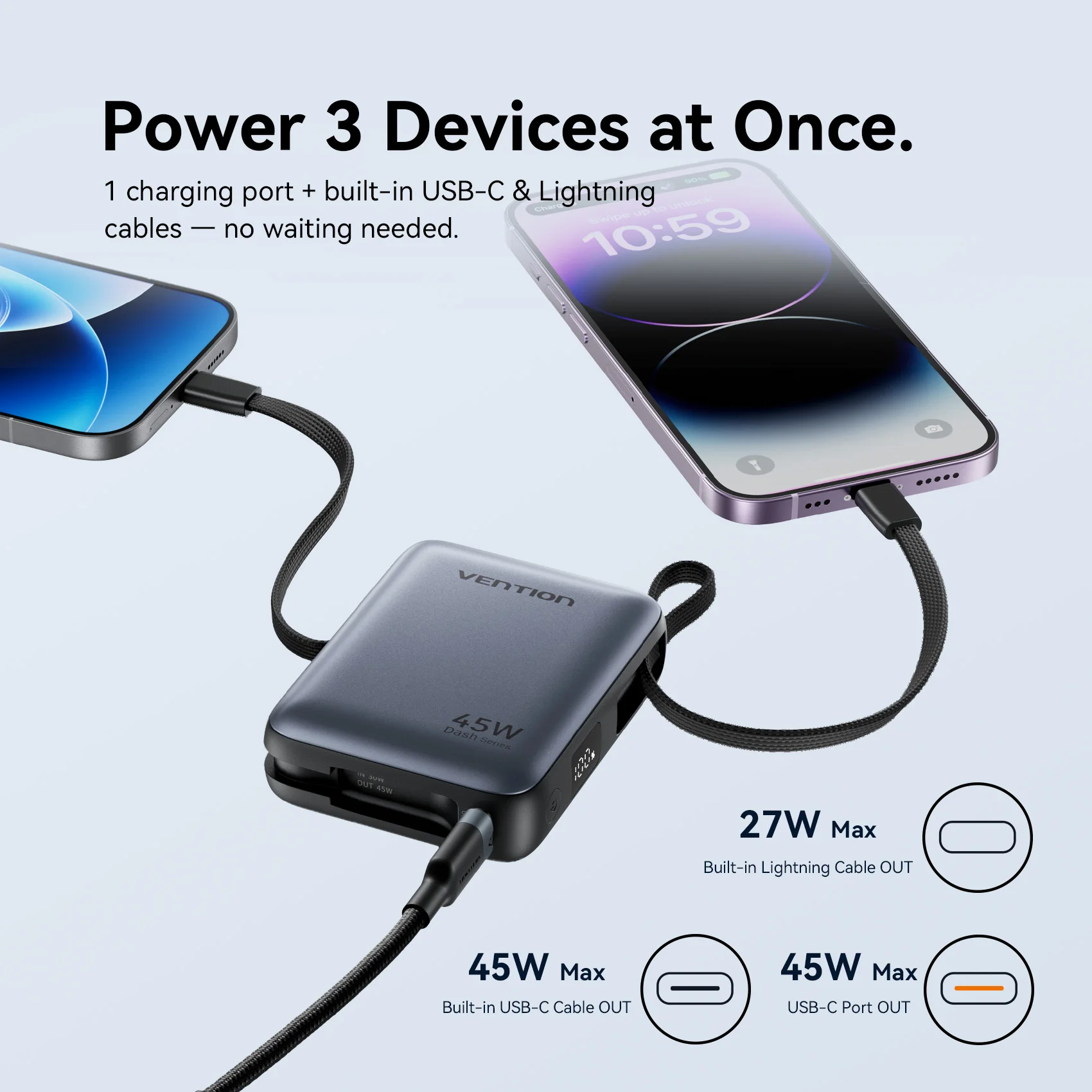
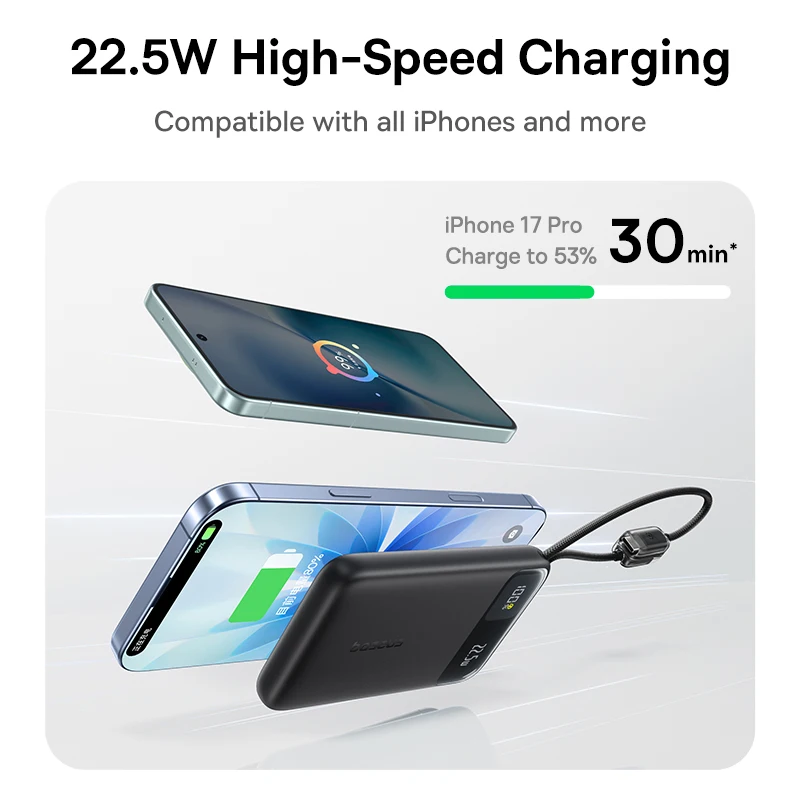
- USB-C and Lightning together. A pocket-sized 10,000mAh power bank with one USB-C and one Lightning cable built in and up to 45W, which lists both USB PD and PPS for fast charging on a mix of phones.
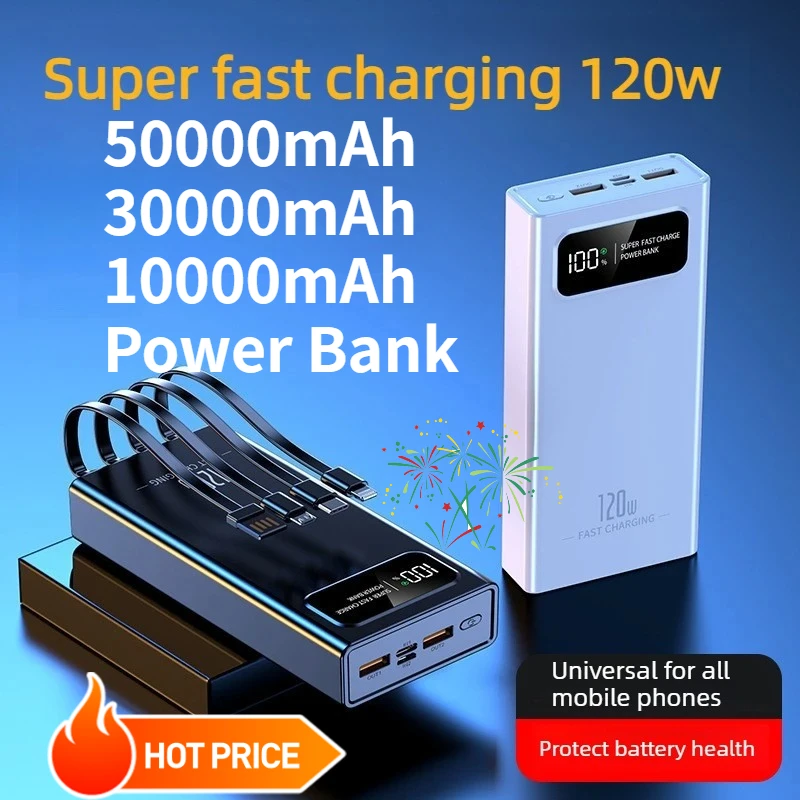
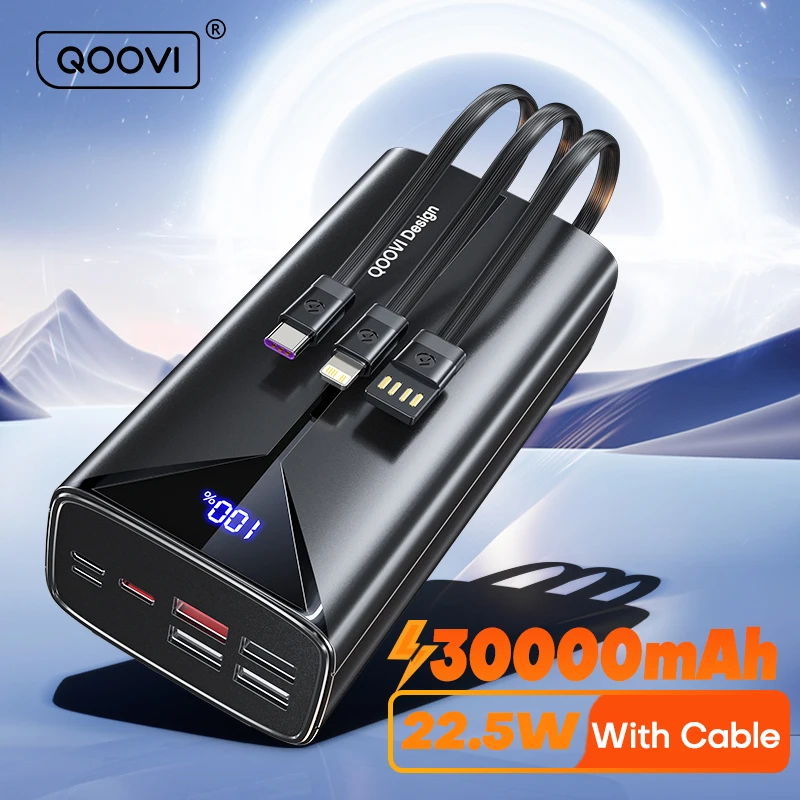
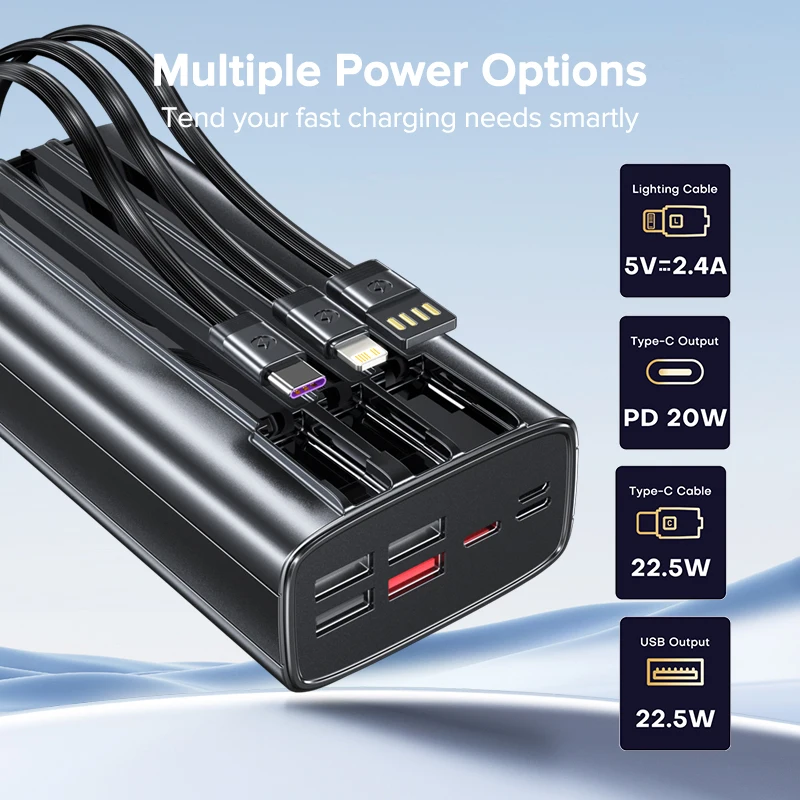
- Large with a cable. A 30,000mAh power bank with its cable built in, also in 20,000mAh and 10,000mAh sizes, for long trips and power cuts.
How to choose one
Match the cables to the phones. iPhone 15 and later and almost all recent Android phones use USB-C; iPhone 14 and earlier use Lightning. A power bank with both suits a household with both. The guide to charging cables lists which phones use which.
Then the size. Roughly two-thirds of the mAh on a power bank reaches the phone, so 10,000mAh gives a phone with a 4,000mAh battery about one and a half charges, and 30,000mAh about five. The larger ones are heavier, and a 30,000mAh power bank with 3.7-volt cells is about 111Wh, which needs the airline's approval to fly. A built-in cable is short, so a phone on charge stays close to the power bank; for more reach, use the socket with a separate short cable.
Questions people ask about power banks with built-in cables
What if a built-in cable breaks?
If the power bank also has a USB-C socket, a separate cable still works. Stop using the power bank if its case is cracked or the cable's joint is damaged or hot.
Can I take one on a plane?
Power banks travel in your hand luggage, never in a checked bag, and the UK Civil Aviation Authority allows two per passenger. They must not be recharged on board, and each should sit in a pouch or its packaging so its sockets cannot touch keys or coins. The limits are in watt-hours: under 100Wh is allowed in the cabin, 100Wh to 160Wh needs the airline's approval, and over 160Wh is not allowed in passenger baggage. Check your airline's own rules as well, as some are stricter.
Is it safe?
Never charge a swollen, damaged or hot power bank. Stop using one that bulges, cracks, smells odd, smokes or gets too hot to hold, and do not take it apart. Charge it uncovered on a hard surface, not on a bed or inside a bag, and unplug it once it is full: Electrical Safety First advises against charging power banks overnight or while you are out. An old power bank goes to a battery recycling point, never the household bin.
More to look at