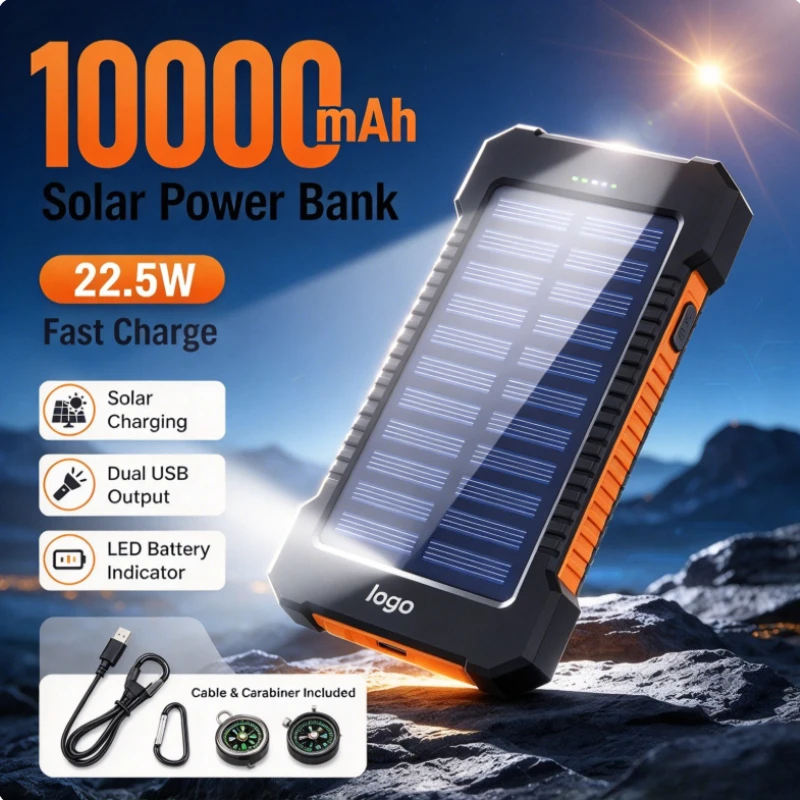
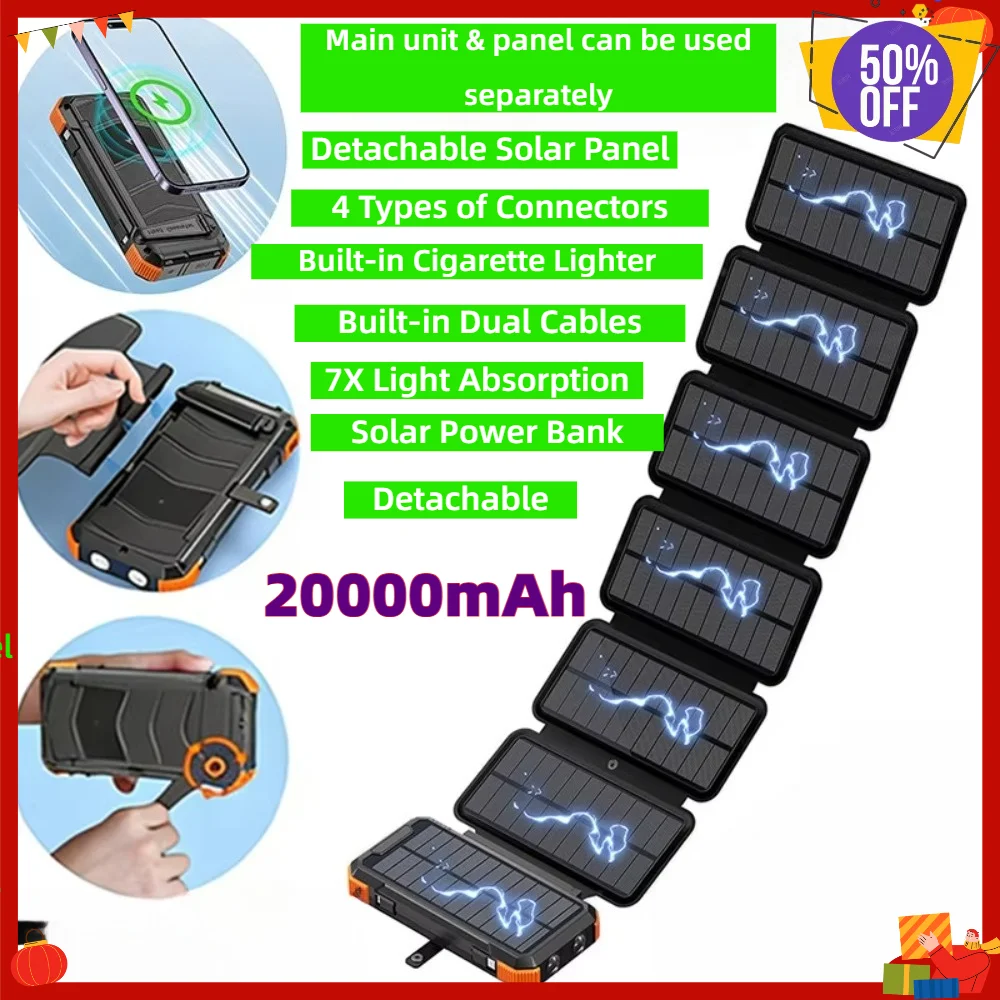
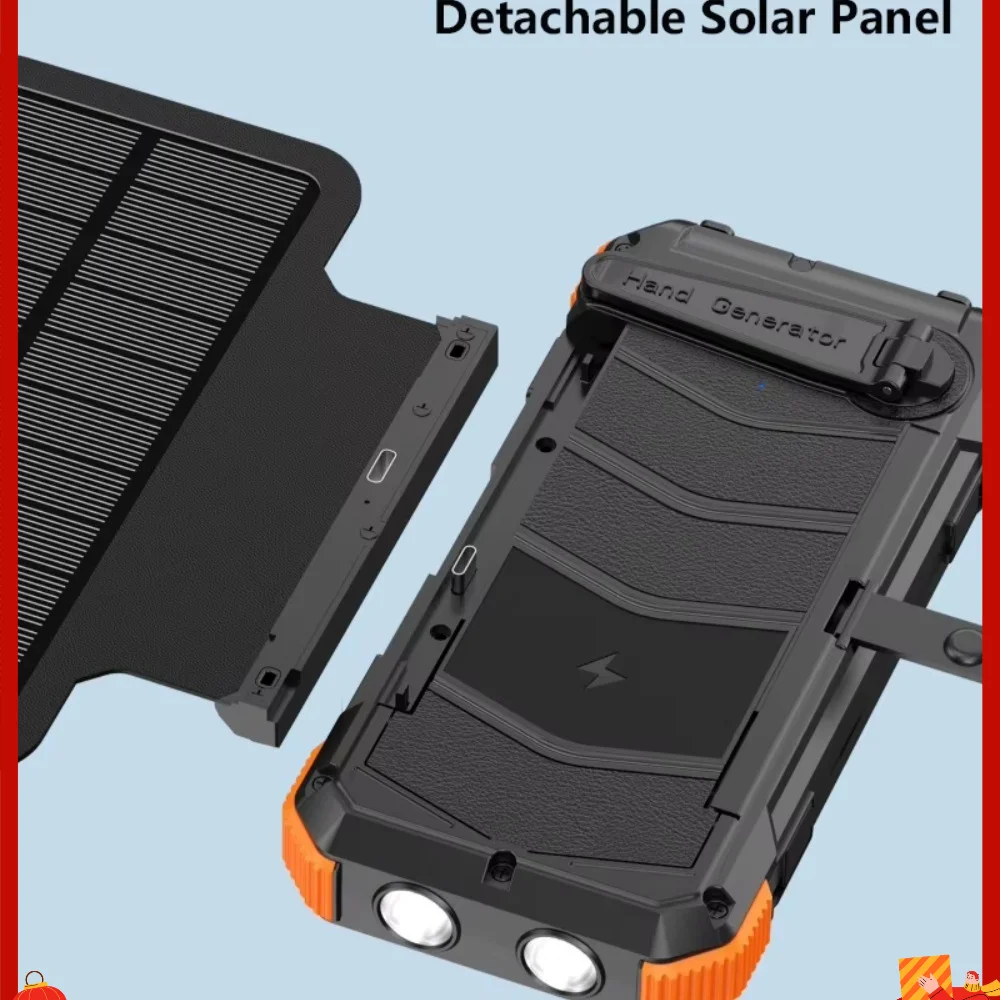
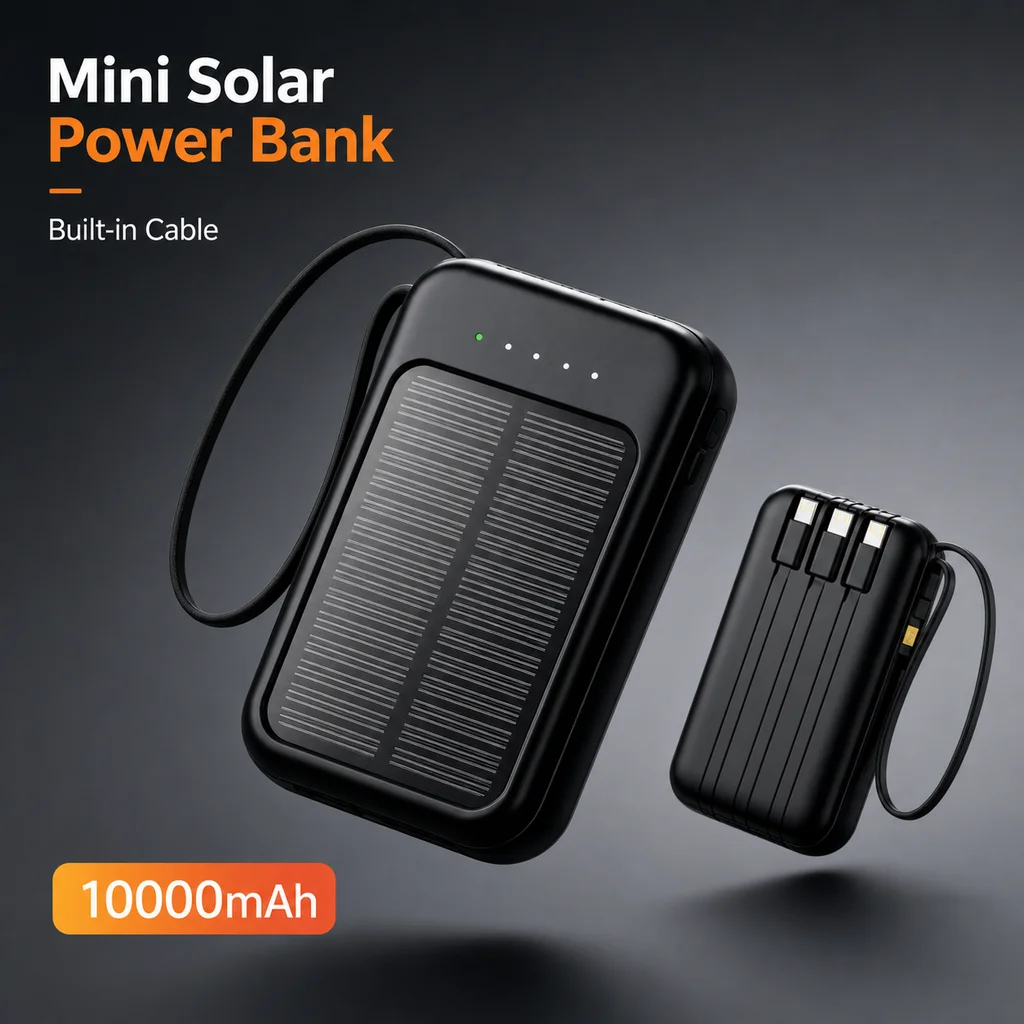
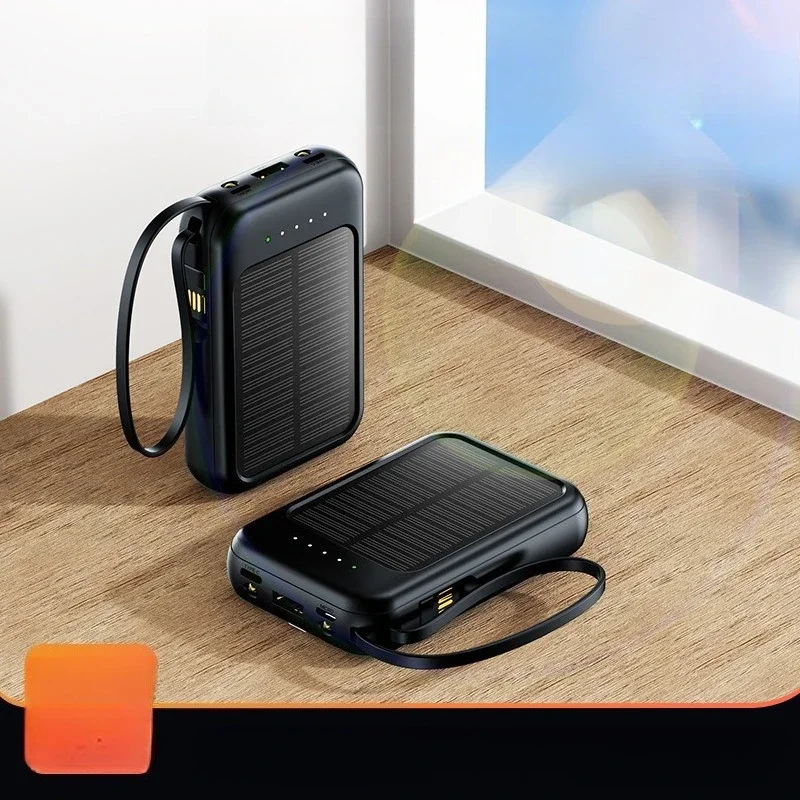
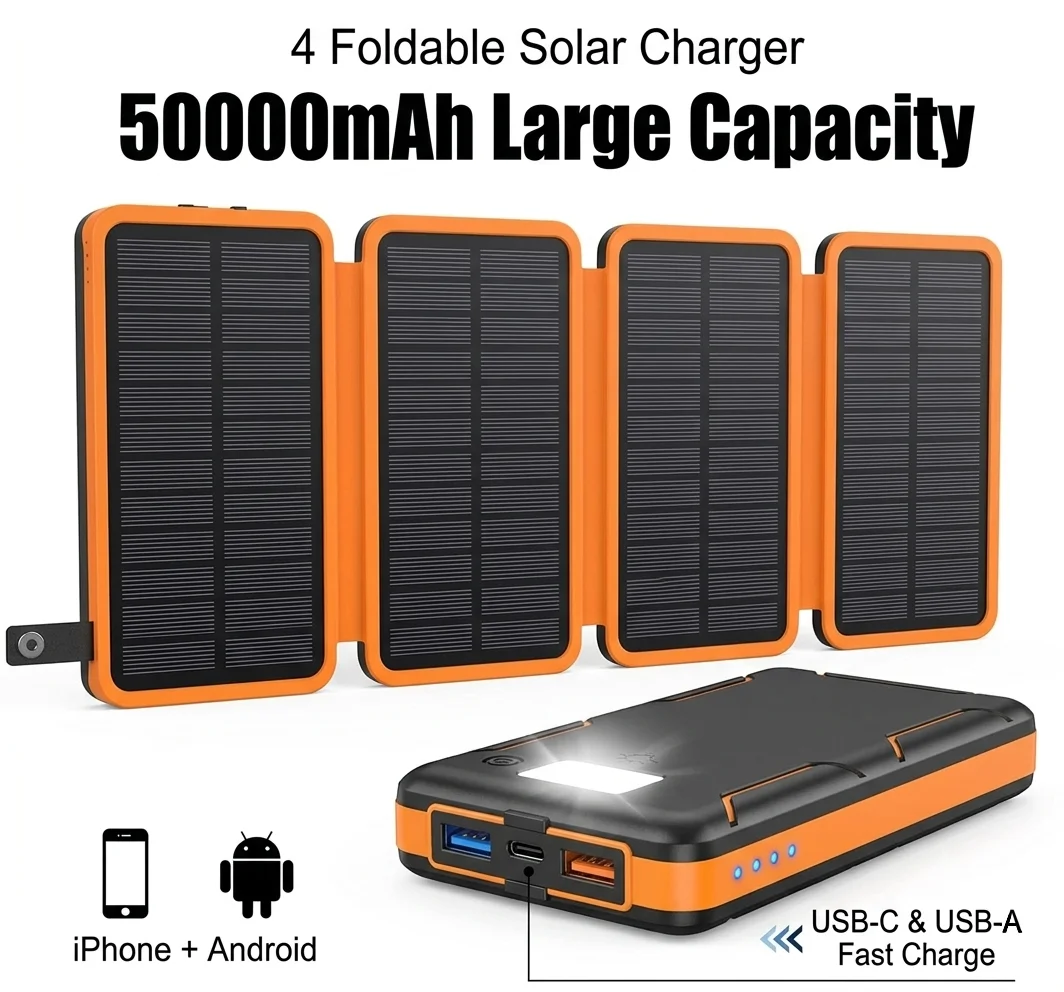
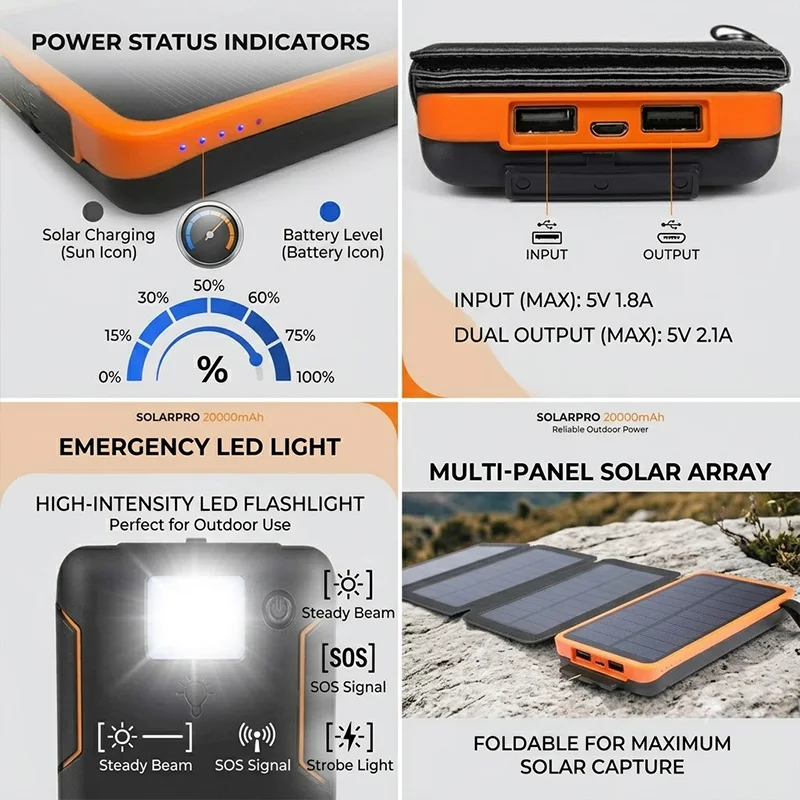
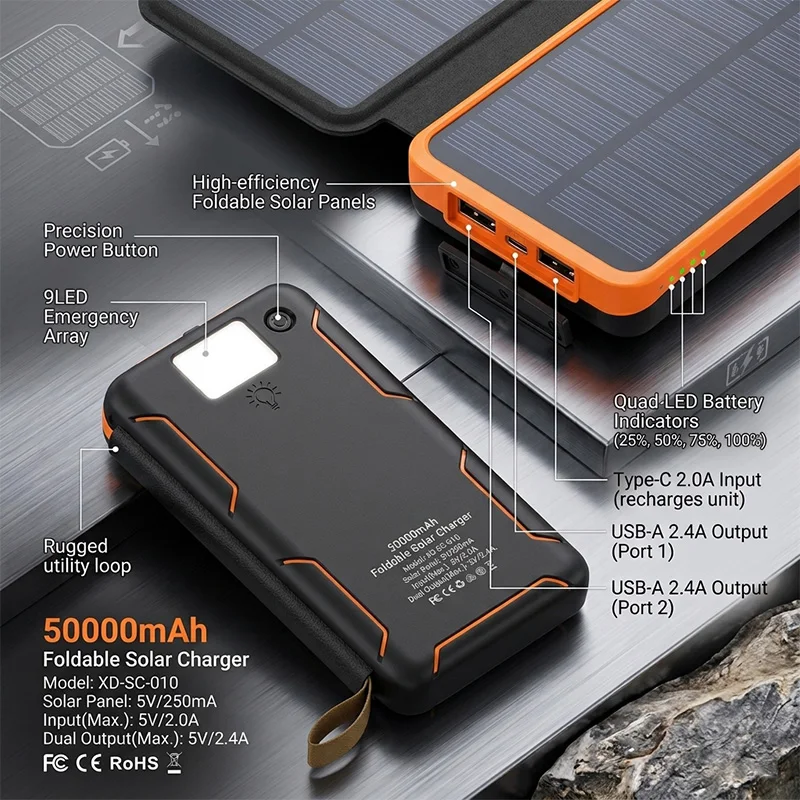
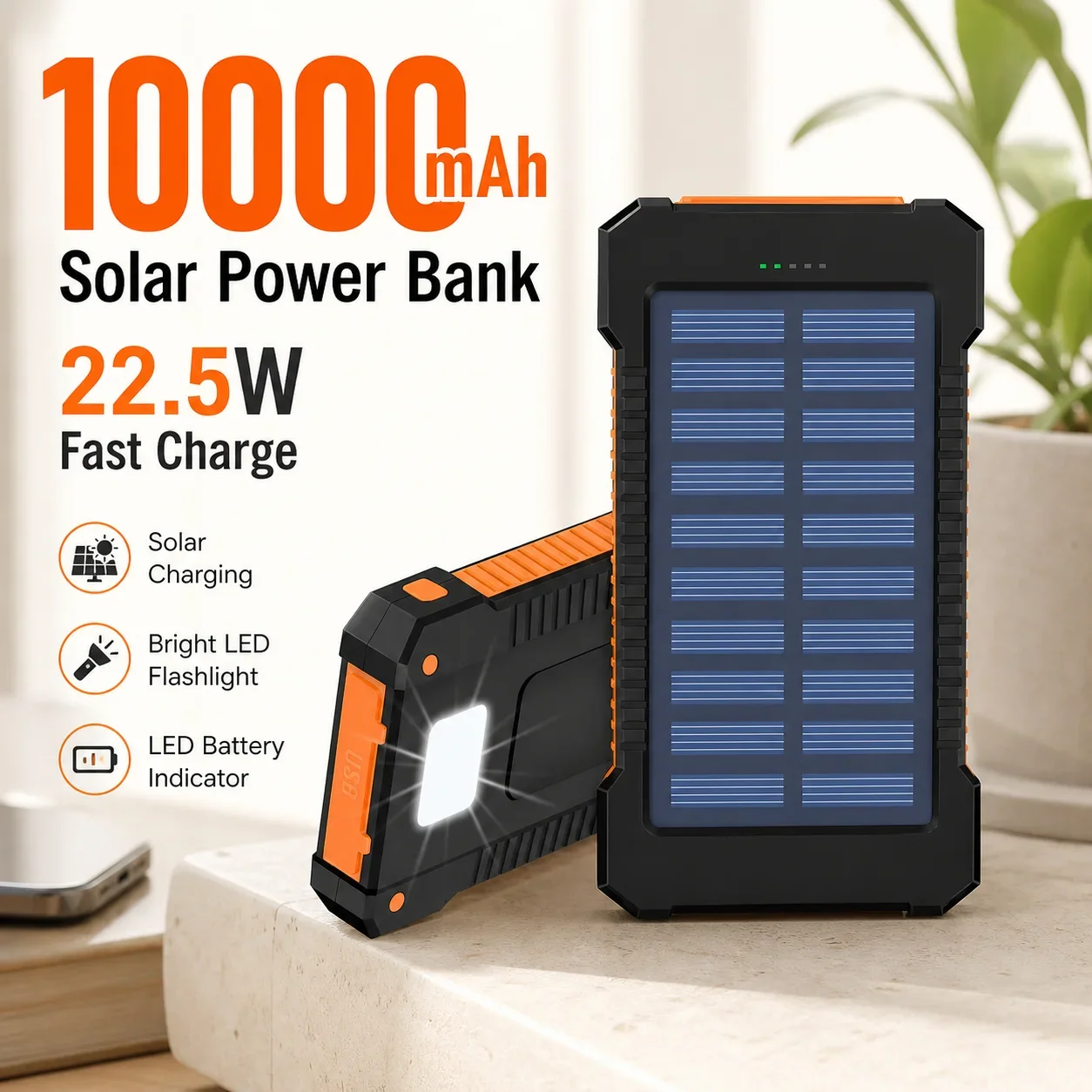
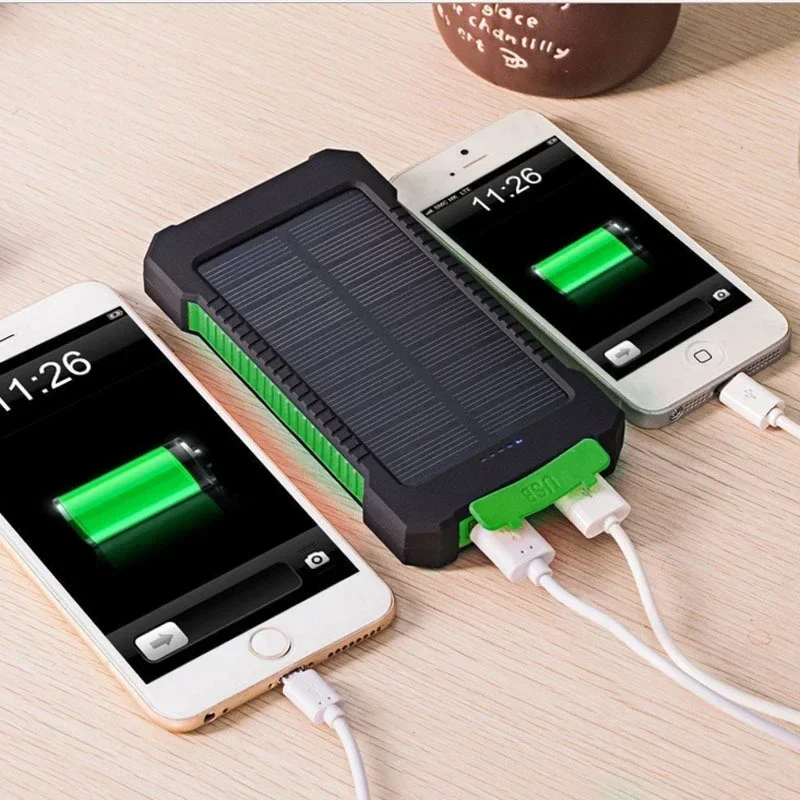
A power bank with a solar panel
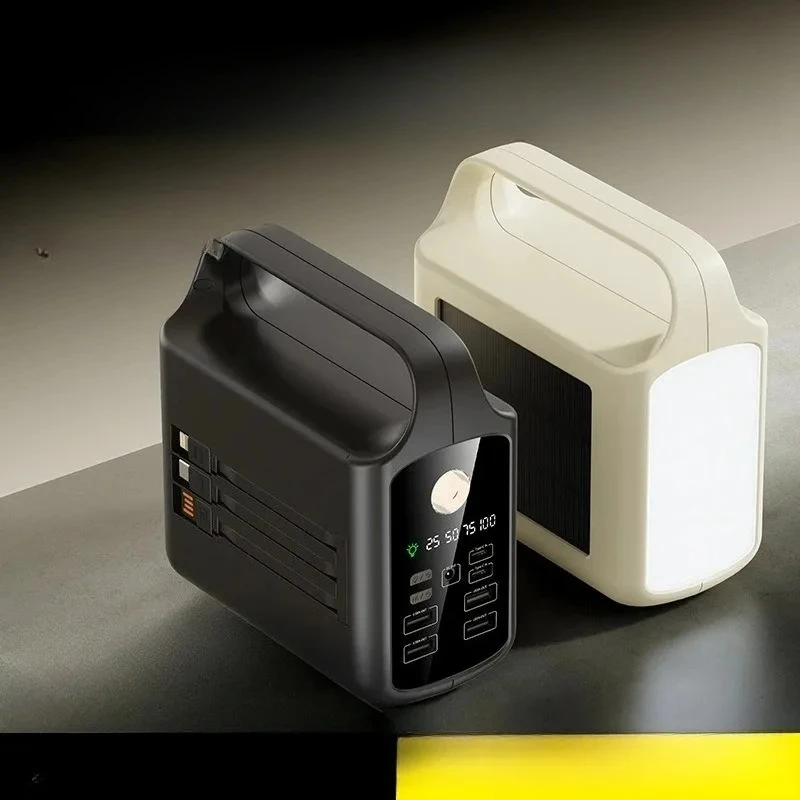
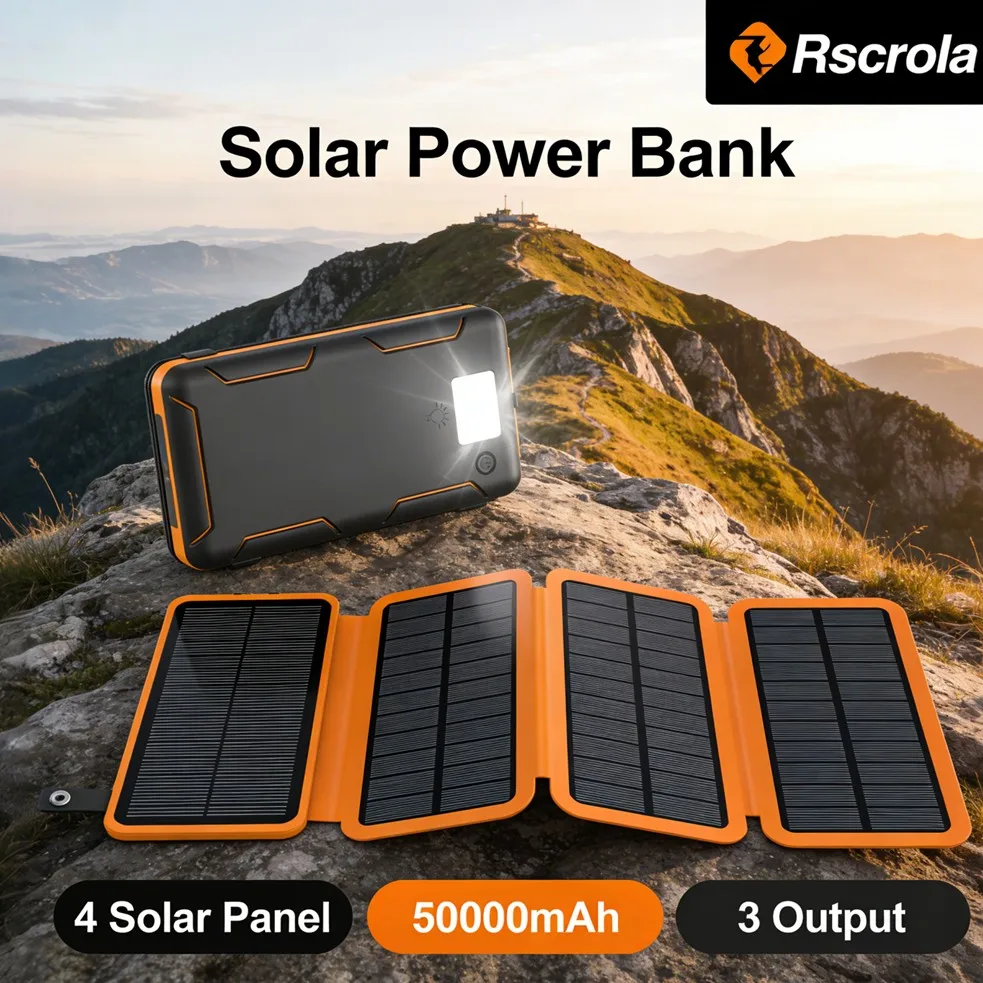
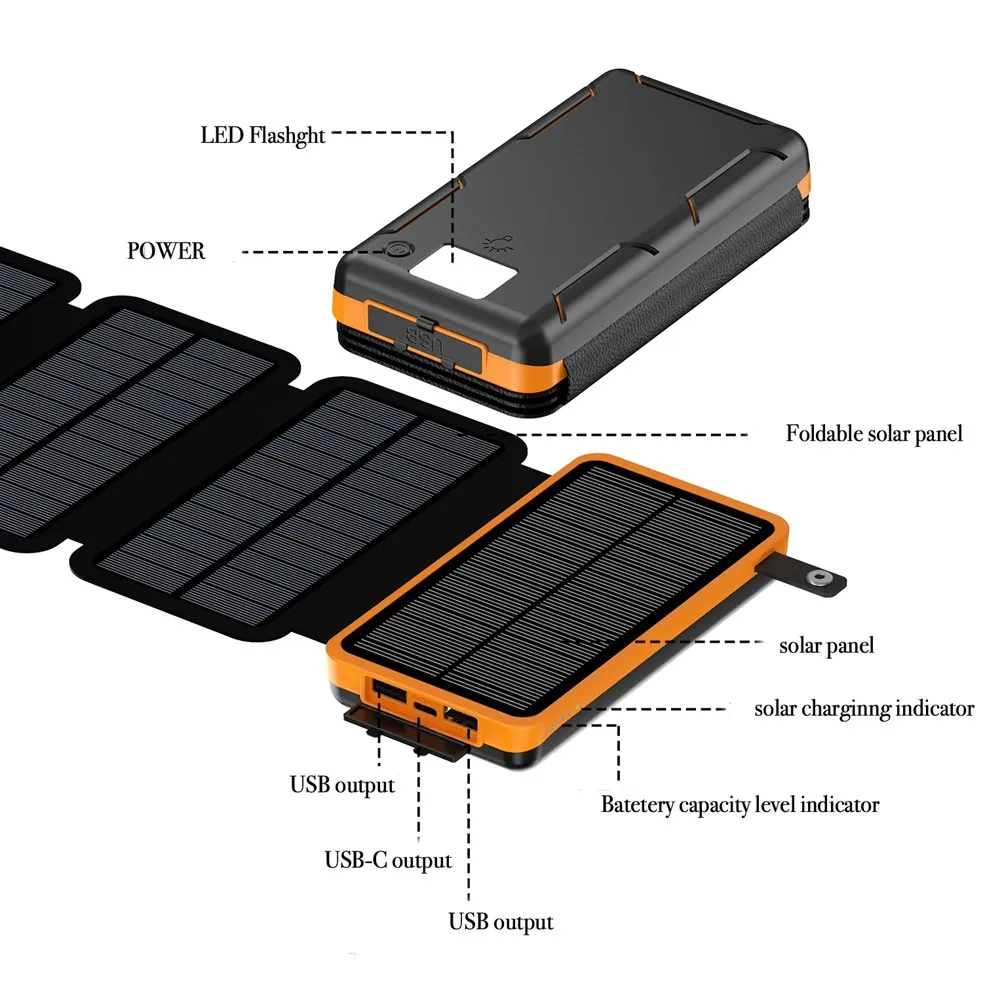
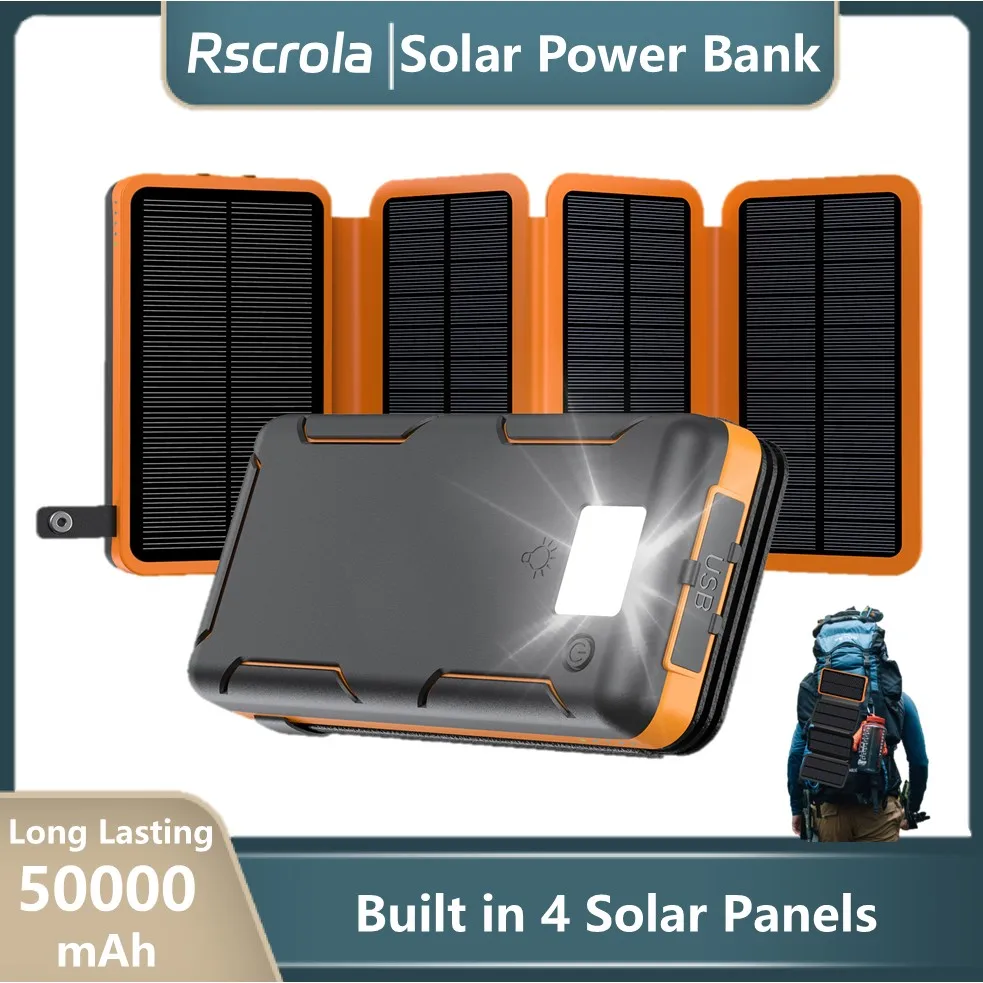
A solar power bank is an ordinary power bank with a small solar panel on its face. It charges a phone over USB like any other, and in daylight the panel adds a little charge to the battery inside. The solar power banks here today come in 10,000mAh and 6,000mAh sizes, in a tough ABS and PC plastic case in a choice of bright colours. They suit camping, walking, festivals, a boat, the car boot and an emergency kit for power cuts, anywhere a socket is far away.
What the sun really adds
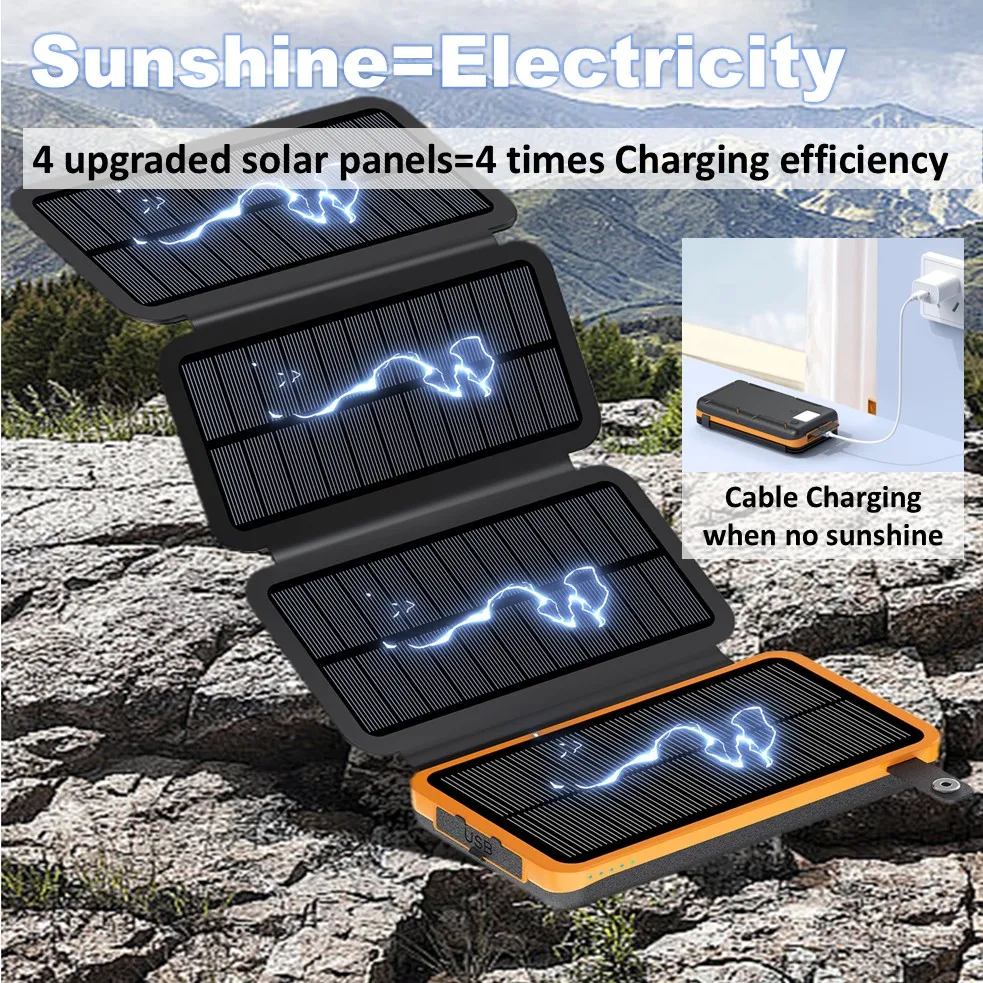
This is the part to be honest about. A phone-sized solar panel is small, and in British daylight it charges the battery inside slowly. Expect it to top the power bank up over a long sunny day, not to fill it from empty, and expect little on a grey one. The makers of the one here call the panel's charging "supplementary", and that is the right word. So the sensible way to use a solar power bank is to fill it from the mains before you go, use it like any other power bank, and let the sun add a little each day while you are out. Leave it in the open facing upward, on a rucksack or the tent roof, but not baking on a car dashboard: heat is bad for the battery inside.
How to choose a solar power bank
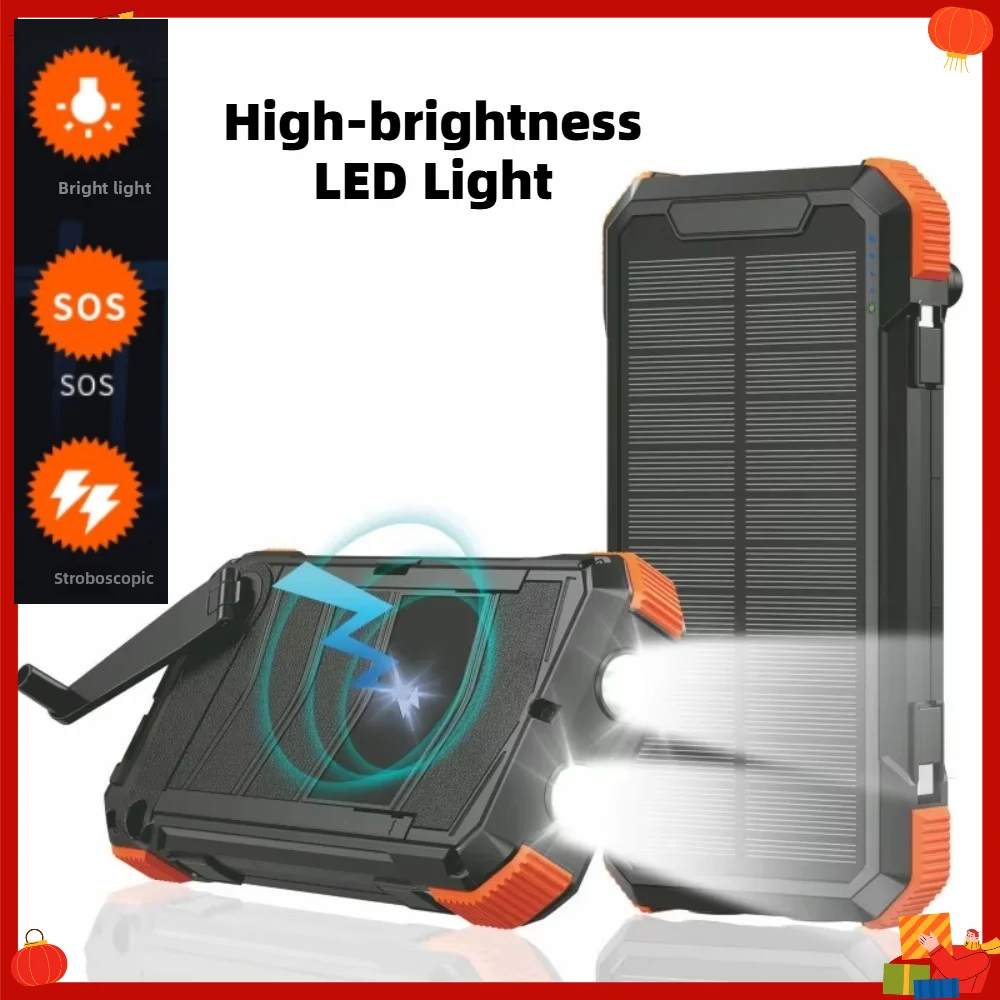
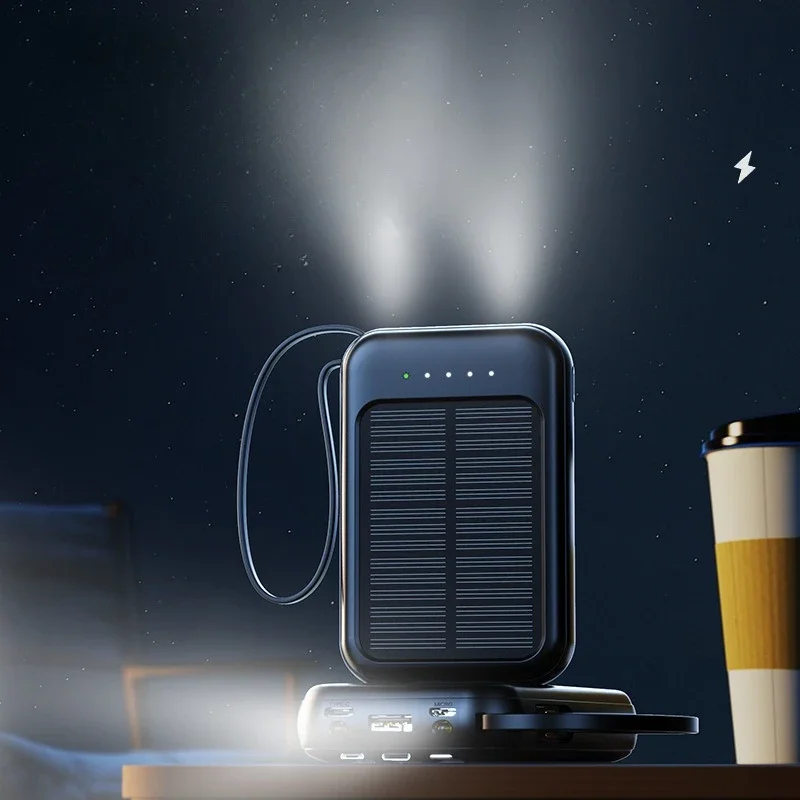
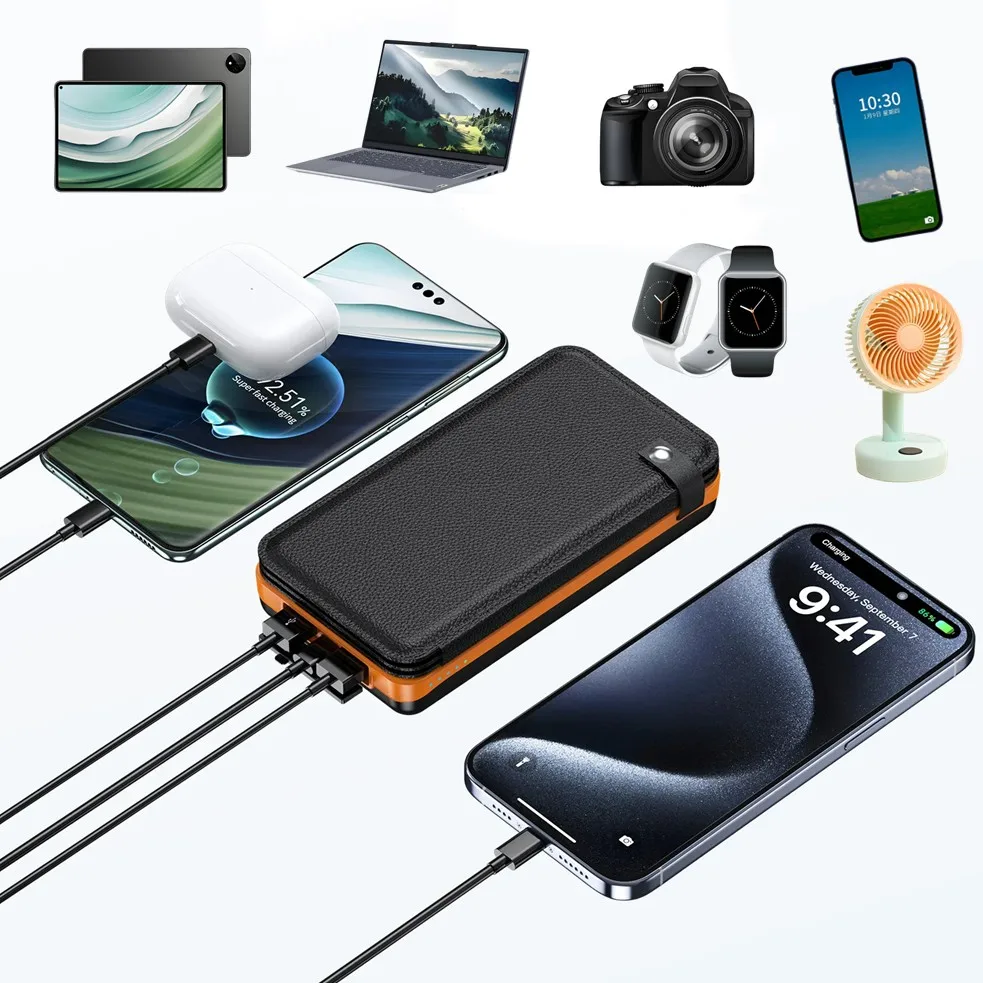
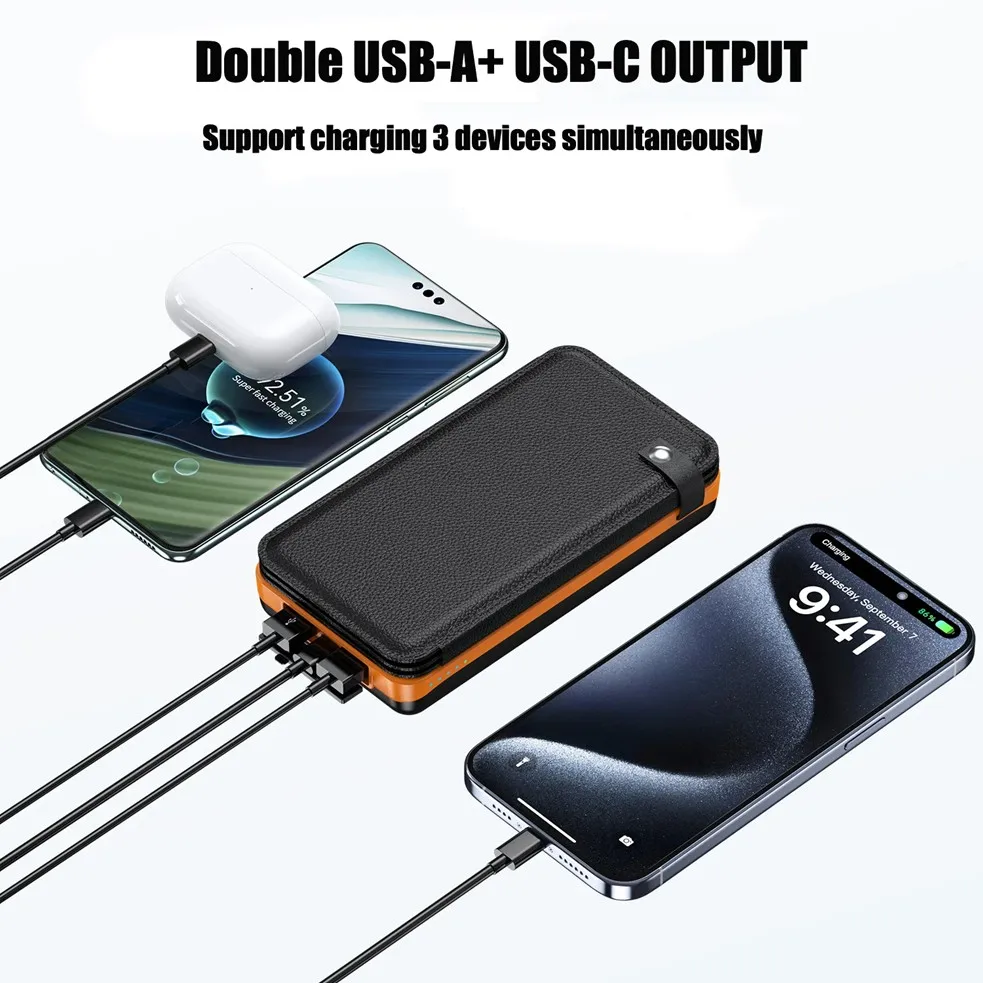
Choose by the battery, as with any power bank, rather than by the panel. Roughly two-thirds of the mAh reaches the phone, so 10,000mAh gives a phone with a 4,000mAh battery about one and a half charges. A larger size suits several days away; for more again, see high-capacity power banks. Then check the sockets for your cable, and whether it has a torch, which is handy at a campsite. Keep a short cable with it. For power with no sun at all, a hand-crank charger makes its own.
Questions people ask about solar power banks
Can I charge it from the sun alone?
Slowly, over days rather than hours. Fill it from a proper charger with a UK three-pin plug before a trip, and treat the sun as a top-up.
Can I take one on a plane?
Power banks travel in your hand luggage, never in a checked bag, and the UK Civil Aviation Authority allows two per passenger. They must not be recharged on board, and each should sit in a pouch or its packaging so its sockets cannot touch keys or coins. The limits are in watt-hours: under 100Wh is allowed in the cabin, 100Wh to 160Wh needs the airline's approval, and over 160Wh is not allowed in passenger baggage. Check your airline's own rules as well, as some are stricter.
Is it safe to leave in the sun?
In open daylight, yes, but not in a hot car or behind glass. Never charge a swollen, damaged or hot power bank. Stop using one that bulges, cracks, smells odd, smokes or gets too hot to hold, and do not take it apart. Charge it uncovered on a hard surface, not on a bed or inside a bag, and unplug it once it is full: Electrical Safety First advises against charging power banks overnight or while you are out. An old power bank goes to a battery recycling point, never the household bin.
More to look at